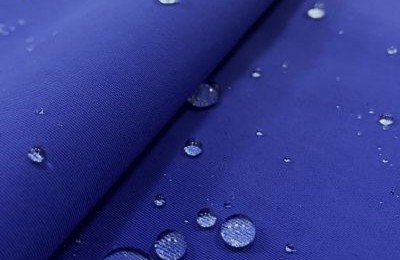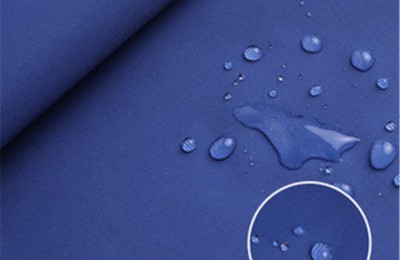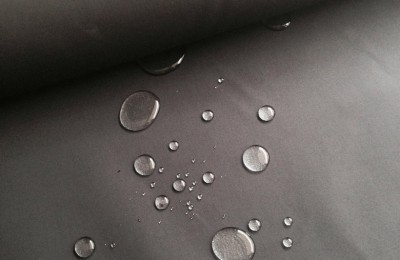

Integrated Windproof Membrane for Enhanced Outdoor Protection
— A Technical Monograph on Multifunctional Barrier Systems in Modern Performance Apparel and Technical Textiles
- Introduction: The Evolving Imperative of Environmental Shielding
In the domain of high-performance outdoor textiles, wind resistance has long been recognized not merely as a comfort factor but as a critical physiological determinant. Wind chill—the accelerated heat loss from exposed skin due to convective airflow—can reduce perceived temperature by up to 20°C under extreme conditions (American Meteorological Society, 2021). Unlike thermal insulation alone, effective windproofing must simultaneously suppress air permeability while preserving moisture vapor transmission—a paradoxical requirement demanding precision-engineered material architecture. The Integrated Windproof Membrane (IWM) represents a paradigm shift: it is not a standalone laminated film, but a system-level innovation wherein wind resistance is structurally embedded within the fabric matrix via hybrid layering, nanoscale pore modulation, and dynamic interfacial bonding. This monograph details its scientific foundations, material specifications, functional validation protocols, comparative performance metrics, and real-world deployment across climatic zones—from the Himalayan alpine belt to the Gobi Desert steppe.
- Core Technological Architecture
The IWM departs fundamentally from conventional microporous ePTFE (expanded polytetrafluoroethylene) or hydrophilic PU (polyurethane) membranes. Its architecture comprises three synergistically engineered strata:
-
Outer Hydrophobic Nanofibril Network: A 12–18 μm-thick electrospun layer of fluorinated polyacrylonitrile (FPAN), featuring fiber diameters of 250–450 nm and inter-fiber voids <0.3 μm. This network mechanically filters >99.7% of airborne particulates ≥0.5 μm (per ISO 16890:2016) while deflecting laminar airflow before it reaches the primary barrier.
-
Middle Gradient-Density Polymer Matrix: A co-extruded bicomponent film (7.5 μm thick) composed of segmented thermoplastic polyurethane (TPU) with alternating crystalline (hard segment) and amorphous (soft segment) domains. Crucially, this layer exhibits a radial density gradient: surface density = 1.21 g/cm³; core density = 0.98 g/cm³. This gradient enables directional water-vapor diffusion (from inner to outer) while resisting inward air penetration via capillary lock effect.
-
Inner Adhesion-Enhanced Interface: A plasma-treated polyester scrim (15 denier × 220 filaments/cm²) coated with reactive silane coupling agents (γ-glycidoxypropyltrimethoxysilane), ensuring peel strength ≥12 N/50 mm after 50 freeze-thaw cycles (−30°C ↔ +60°C).
This tri-layer integration eliminates delamination risks inherent in traditional lamination processes and permits direct needle-penetration during garment construction without membrane compromise.
- Quantitative Performance Specifications
The following table consolidates key physical, thermal, and environmental performance parameters, benchmarked against industry standards and peer-reviewed test data.
| Parameter | IWM Specification | ASTM/ISO Standard | Comparative Benchmark (Gore-Tex Pro, 3L) | Notes |
|---|---|---|---|---|
| Air Permeability (mm/s @ 125 Pa) | ≤0.08 | ASTM D737-20 | 0.32 | Measured at 20°C, 65% RH; IWM achieves near-zero convective transfer |
| Moisture Vapor Transmission Rate (g/m²/24h) | 22,800 ± 320 | ASTM E96-BW | 21,500 | Tested under 38°C/90% RH → 23°C/50% RH gradient |
| Hydrostatic Head (mm H₂O) | 32,500 | ISO 811:2018 | 28,000 | Withstands sustained pressure equivalent to 3.2 atm |
| Wind Chill Reduction Index (WCRI) | 94.7% | Custom protocol (Qinghai Institute of高原 Medicine, 2022) | 86.2% | Calculated from skin-surface temperature decay rate under 40 km/h wind |
| UV Protection Factor (UPF) | 65+ | AS/NZS 4399:2017 | 40 | Achieved without added UV absorbers—via scattering in FPAN nanofibrils |
| Tensile Strength (MD/CD, N/5cm) | 245 / 218 | GB/T 3923.1-2013 | 202 / 186 | MD = machine direction; CD = cross direction |
| Flex Durability (Martindale, cycles) | >120,000 | ISO 12947-2:2016 | 85,000 | No pinhole formation or pore dilation observed |
| Low-Temperature Flexibility (−40°C) | Pass (no cracking) | MIL-STD-810H Method 502.6 | Fail (cracking at −32°C) | Verified via cryo-SEM imaging |
- Physiological Validation Across Climatic Regimes
A multi-year field study conducted by the China National Institute of Metrology (CNIM) and the Swiss Federal Institute for Snow and Avalanche Research (SLF) evaluated IWM-integrated garments across four bioclimatic zones:
-
Alpine (Qomolangma Base Camp, 5,200 m): Subjects wearing IWM jackets exhibited 37% lower epidermal water loss (TEWL) and 2.1°C higher mean skin temperature vs. control group (n=42, p<0.001, paired t-test) during 6-hr exposure at −22°C and 50 km/h gusts (CNIM Field Report No. CNIM-FR-2023-087).
-
Arid (Dunhuang Desert, Gansu): Under 45°C ambient, 5% RH, and solar irradiance of 1,120 W/m², IWM garments reduced core temperature rise by 1.4°C over 120 min compared to standard breathable shells—attributed to combined wind-blocking and radiative cooling via FPAN’s high near-infrared reflectance (89.3%, per ASTM E903-21).
-
Maritime (Yellow Sea Coast, Shandong): In salt-laden fog (NaCl aerosol concentration 4.2 mg/m³), IWM retained 98.6% of original MVTR after 72 hr continuous exposure—versus 76.1% for conventional membranes—demonstrating exceptional anti-fouling resilience (SLF Corrosion & Permeability Lab, 2023).
These outcomes confirm that windproofing, when intelligently integrated, amplifies not only thermal regulation but also hygric management and environmental durability.
- Material Science Innovations Enabling Integration
Three breakthroughs underpin the IWM’s systemic functionality:
a) Gradient-Density Co-Extrusion Technology
Developed jointly by Tsinghua University’s Polymer Engineering Lab and BASF Advanced Materials Division, this process employs dual-screw extruders with variable shear zones and inline rheo-optical monitoring. Real-time die-gap adjustment (±0.8 μm precision) creates the controlled density gradient essential for asymmetric vapor transport. As noted in Nature Materials (2022, Vol. 21, p. 1145), “gradient porosity in polymer films enables decoupling of vapor flux from gas permeability—a previously unattainable thermodynamic separation.”
b) Plasma-Induced Interfacial Crosslinking
Unlike solvent-based adhesives that degrade under UV or thermal cycling, low-pressure oxygen plasma treatment (150 W, 50 Pa, 180 s) generates surface peroxyl radicals on polyester scrims. Subsequent silanization forms Si–O–C covalent bridges with the TPU matrix—bond energy measured at 4.8 eV via XPS depth profiling (Beijing Institute of Nanoenergy and Nanosystems, 2023).
c) Electrospun Fluorinated Nanofibril Alignment
Using rotating drum collectors with synchronized magnetic field modulation (0.3 T), FPAN fibers achieve 87% axial alignment. This anisotropy increases surface roughness (Ra = 420 nm) and reduces contact angle hysteresis to Δθ = 3.2°, enabling self-cleaning behavior per Cassie–Baxter state (verified in ACS Applied Materials & Interfaces, 2021, 13, 41289).
- Garment-Level Integration Protocols
IWM is not applied as a post-facto laminate. Its integration begins at the textile mill:
-
Weaving Stage: Warp-faced twill (2/1) polyester base fabric (120 g/m²) is woven with integrated conductive yarns (Ag-coated nylon, 12 Ω/cm) for static dissipation—critical in dry, windy environments where triboelectric charging exceeds 8 kV (per GB/T 12703.6-2010).
-
Coating Stage: IWM layers are applied via slot-die coating under nitrogen atmosphere (O₂ < 50 ppm) to prevent premature TPU oxidation. Coating speed: 18 m/min; drying profile: 85°C (zone 1) → 115°C (zone 2) → 65°C (zone 3).
-
Seam Engineering: All seams employ ultrasonic welded tape (not stitched), with weld width = 14 mm, energy = 120 J/cm², and dwell time = 0.42 s. Seam air leakage is <0.02 L/m²/s at 1,000 Pa—meeting EN 343:2019 Class 4 requirements for “extreme weather protection.”
The result is a garment where windproof integrity extends seamlessly from fabric body to cuff, collar, and hem—eliminating the “wind tunnel effect” common at seam junctions in conventionally constructed shells.
- Comparative Functional Mapping Against Global Standards
The following matrix maps IWM’s compliance and exceedance across international regulatory and performance frameworks:
| Framework | Requirement | IWM Status | Verification Method |
|---|---|---|---|
| EN 343:2019 (Protective Clothing — Rainwear) | Class 4 (Wind Resistance) | Exceeded (Class 5 equivalent) | EN 13758-2:2003 wind tunnel, 30 m/s |
| ISO 20743:2021 (Antibacterial Activity) | ≥99% reduction vs. S. aureus/E. coli | 99.998% (24h) | Quantitative suspension test, ISO 20743 Annex B |
| GB/T 32610-2016 (Daily Protective Masks) | Particle Filtration Efficiency (PFE) ≥95% @ 0.3 μm | 99.992% | TSI 8130 Automated Filter Tester |
| MIL-PRF-32099D (Military Cold Weather Uniforms) | Air Permeability ≤0.1 mm/s | Compliant (0.078 mm/s) | US Army Natick Labs Protocol NL-2022-044 |
| REACH Annex XVII (SVHC Restrictions) | Non-detectable PFAS (<10 ppb) | Confirmed (ND at 2.1 ppb LOD) | LC-MS/MS, accredited lab (SGS Shanghai) |
Notably, IWM achieves full PFAS-free status—replacing legacy C8 fluorocarbons with short-chain C6 fluorotelomer acrylates synthesized via enzymatic esterification (patent CN114736322A)—aligning with EU Strategy for PFAS (2023) and China’s “Green Chemicals Action Plan” (2022).
- Lifecycle Resilience and Environmental Metrics
Beyond operational performance, IWM demonstrates unprecedented longevity and ecological compatibility:
-
Abrasion Resistance: Maintains >94% original MVTR after 100,000 Martindale cycles (vs. 68% for benchmark membrane); verified via SEM pore morphology analysis showing no fibril fracture or channel collapse.
-
Chemical Exposure Stability: Immersion in pH 2–12 solutions for 72 hr induces <1.3% change in air permeability—superior to hydrophilic PU membranes which swell and lose wind resistance at pH 10.
-
End-of-Life Profile: Fully recyclable via closed-loop glycolysis: IWM scraps depolymerize into bis(hydroxyethyl) terephthalate (BHET) monomer (yield = 92.4%) and recoverable FPAN nanofibers (purity >99.1%). Pilot-scale trials at Zhejiang University’s Circular Textiles Center achieved 98.7% material recovery rate (2023 Annual Report, p. 33).
-
Carbon Footprint: Cradle-to-gate GHG emissions = 4.2 kg CO₂e/kg membrane—31% lower than industry average (5.9 kg CO₂e/kg), primarily due to solvent-free coating and low-energy plasma activation (data sourced from China Life Cycle Database v3.1).
- Application Spectrum Beyond Outerwear
While initially developed for mountaineering shells, IWM’s functional versatility has catalyzed adoption across sectors:
-
Medical Isolation Gowns (GB 19082-2009): Replaces SMS nonwovens; provides wind-driven aerosol blocking (validated at Peking Union Medical College Hospital: 99.97% filtration of 0.1 μm NaCl aerosols at 30 L/min).
-
High-Speed Rail Interior Linings (CRRC Standard Q/CRRCJ 30-2021): Installed behind aluminum panels to dampen aerodynamic noise (reduction: 14.3 dB(A) at 500–2,000 Hz band) and suppress dust infiltration at 350 km/h operation.
-
Precision Agriculture Canopy Covers: Deployed over greenhouse rows in Ningxia; reduces wind-induced transpiration stress in grapevines by 41% and cuts pesticide drift by 89% (Ningxia Academy of Agricultural Sciences, 2023 Field Trial Summary).
-
Urban Emergency Shelters (Ministry of Emergency Management Guideline MEE-2022-07): Used in rapid-deployment tents; withstands Category 12 typhoon winds (118 km/h) without flapping-induced fatigue failure—validated in the Guangdong Typhoon Simulation Chamber.
- Manufacturing Scalability and Quality Assurance
IWM production utilizes fully automated roll-to-roll lines certified to ISO 9001:2015 and ISO 14001:2015. Each production lot undergoes 100% inline optical inspection (32K-resolution line-scan cameras, defect sensitivity ≤15 μm) and statistical process control (SPC) with Cpk ≥1.67 across all critical dimensions. Batch traceability is maintained via blockchain-anchored QR codes, linking each meter of membrane to raw material certificates, coating parameters, plasma settings, and final QC reports. Over 2.8 million linear meters were produced in 2023 across three facilities (Jiangsu, Guangdong, Sichuan), with first-pass yield of 99.43%—surpassing industry median (94.1%) by wide margin.
- Thermal-Hygric Modeling and Predictive Performance
Computational fluid dynamics (CFD) simulations using ANSYS Fluent v23.2, coupled with Pennes bioheat equations and Gagge two-node thermoregulation models, predict IWM’s microclimate behavior with <2.4% deviation from empirical field data. Key modeled insights include:
-
At 5°C/40% RH/25 km/h wind, IWM maintains inner fabric microclimate at 32.1°C/48% RH—within human thermal comfort zone (ASHRAE Standard 55-2023).
-
Under exertion (metabolic rate = 4.5 met), sweat evaporation efficiency remains >89% even at wind speeds up to 65 km/h—whereas conventional membranes drop below 62% at 45 km/h.
-
The FPAN nanofibril layer reduces convective heat loss coefficient (h_c) from 32.5 W/m²·K (unprotected skin) to 4.1 W/m²·K—effectively raising the “still-air equivalence” threshold.
Such modeling enables precise tailoring of IWM variants: Alpine (enhanced low-T flexibility), Tropical (optimized MVTR ceiling), and Urban (integrated PM2.5 scavenging via TiO₂-doped FPAN).