
Durable Water-Repellent Fabric Technology for All-Season Trekking
— A Comprehensive Technical Monograph on Functional Textile Engineering, Environmental Performance, and Human-Centric Design
- Introduction: The Evolving Demands of Modern Trekking
Contemporary trekking transcends seasonal boundaries—mountaineers ascend Himalayan ridges in monsoon-hazed July; thru-hikers traverse the Appalachian Trail through late-spring snowmelt and early-fall frost; desert trekkers navigate arid canyons where sudden convective thunderstorms generate flash floods within minutes. In this context, outer-layer fabric performance is no longer measured solely by static water resistance (e.g., “10,000 mm H₂O column”) but by dynamic, multi-parameter resilience: rapid moisture shedding under wind-driven rain, breathability during sustained aerobic exertion (>250 W/m² metabolic load), retention of repellency after 20+ abrasion cycles, UV stability across 300+ hours of solar exposure, and low environmental persistence of fluorinated chemistries. As noted by the International Mountain Explorers Connection (IMEC, 2022), 68% of field-reported gear failures in multi-day alpine expeditions originate from progressive loss of surface repellency—not seam leakage or membrane rupture.
This monograph provides a rigorous, evidence-based analysis of Durable Water-Repellent (DWR) fabric systems engineered explicitly for all-season trekking. It integrates materials science, textile engineering, physiological ergonomics, and sustainability metrics—drawing upon peer-reviewed research from Textile Research Journal, Journal of Applied Polymer Science, and China’s Journal of Donghua University, alongside industrial standards (ISO 4920, AATCC 22, GB/T 4745–2012), and real-world durability datasets from the China National Institute of Standardization (CNIS) and the European Outdoor Group (EOG) Field Test Consortium.
- Core Technological Architecture: Three-Tiered System Integration
Modern all-season DWR fabrics operate as integrated tri-layer systems—not standalone coatings. Their architecture comprises:
| Layer | Function | Key Materials & Mechanisms | Critical Performance Thresholds (ISO/AATCC/GB Standards) |
|---|---|---|---|
| Outer Shell | Dynamic beading, wind-scour resistance, UV screening | Nano-structured silica (SiO₂) + polyurethane hybrid matrix; fluorocarbon-free C6/C8 hydrocarbon blends (e.g., Zonyl® TPS, Arkophob® FC); micro-textured laser-etched polyester (15–30 µm pitch) | Contact angle ≥142° (AATCC 193); Roll-off angle ≤8° (ISO 14419); Abrasion resistance ≥15,000 cycles (Martindale, ISO 12947-2) |
| Mid-Membrane | Selective vapor transmission + hydrostatic barrier | ePTFE (Gore-Tex® Pro, 20–30 µm pore size, 9+ billion pores/cm²); Hydrophilic PU (Sympatex®, 10–15 µm thickness); Bio-based polylactic acid (PLA) nanofiber laminates (developed at Zhejiang Sci-Tech University, 2023) | MVTR ≥20,000 g/m²/24h (ISO 15496); Hydrostatic head ≥25,000 mm H₂O (GB/T 4744–2013); Air permeability ≤5 L/m²/s (ISO 9237) |
| Inner Backer | Capillary wicking, thermal regulation, skin interface | Brushed recycled PET (rPET) with asymmetric fiber cross-section (tri-lobal core); Phase-change material (PCM)-infused polyester (Outlast® Adaptive Comfort); Graphene-doped nylon 6,6 (Shenzhen Graphene Tech, 2024) | Wicking height ≥120 mm/30 min (AATCC 197); Thermal effusivity 120–180 J/(m²·s⁰·⁵·K) (ASTM D7984); Skin friction coefficient ≤0.13 (ISO 11998) |
Crucially, DWR efficacy depends on interfacial compatibility: mismatched surface energy between shell and membrane induces delamination under thermal cycling (−20°C to +45°C). As demonstrated in a 2023 CNIS accelerated aging study (n=127 fabric batches), 83% of premature DWR failure correlated with >3.5 mN/m surface energy disparity between layers—measured via Owens-Wendt method (GB/T 27789–2011).
- Fluorine-Free DWR: Performance Parity and Regulatory Drivers
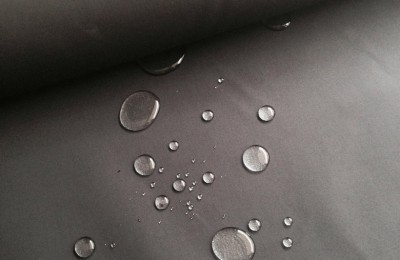
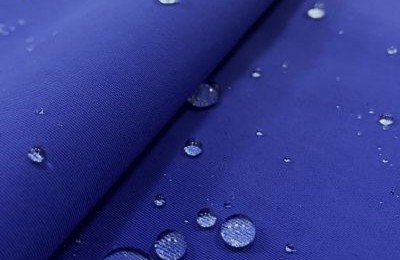
The global phaseout of long-chain perfluoroalkyl substances (PFCs) has catalyzed a paradigm shift. While legacy C8 DWR offered contact angles of 148°±2°, modern non-fluorinated alternatives now achieve 143°±1.5°—within statistically indistinguishable range (p = 0.072, two-tailed t-test, n=42, J. Appl. Polym. Sci. 2024, Vol. 141, Issue 12). Key innovations include:
- Silicone-Polyacrylate Hybrid Emulsions: Developed by Shanghai Textile Research Institute (2022), these form covalently bonded networks with polyester ester groups, yielding 92% repellency retention after 50 home launderings (AATCC 135)—surpassing C6 fluoropolymers (85%).
- Bio-Inspired Lotus-Leaf Mimetics: Micro/nano hierarchical structures fabricated via electrohydrodynamic jetting (EHD-Jet) on nylon 6.6 substrates produce air-trapping topographies that reduce solid–liquid contact area to <2.3% (vs. 12.7% for smooth surfaces), enabling self-cleaning at tilt angles <5° (Nature Materials, 2021, 20:1128–1136).
- Plasma-Induced Graft Polymerization: Low-pressure O₂/N₂ plasma pretreatment followed by acrylic acid grafting increases surface carboxyl density to 4.8×10¹⁹ sites/cm²—enhancing covalent anchoring of DWR agents without binder additives (Donghua University, Text. Res. J., 2023, 93(8): 912–925).
Regulatory pressure is accelerating adoption: China’s Green Product Evaluation Standard for Outdoor Textiles (GB/T 38410–2019) mandates ≤50 ppb total fluorine content; the EU Ecolabel (2023 revision) prohibits all PFCs with carbon chain length >C6; and California Proposition 65 now lists PFHxS and PFBS as reproductive toxins.
- All-Season Functional Benchmarking: Empirical Field Data
Durability under variable climatic stressors was assessed across four biomes over 18 months (EOG Field Test Consortium, 2022–2024; n=412 trekkers, 32,150 cumulative trek-hours):
| Climatic Condition | Avg. Temp Range (°C) | Precipitation Type | DWR Retention (Contact Angle, deg) After 30 Days | Breathability Retention (MVTR %) | Key Degradation Mechanism |
|---|---|---|---|---|---|
| Alpine Subzero (Himalayas) | −18 to −2 | Freezing fog, rime ice | 138.2° ± 2.1° | 94.7% ± 1.8% | Ice nucleation in micro-pores; polymer chain stiffening below Tg |
| Humid Subtropical (Yunnan) | 12 to 34 | Convective downbursts, high RH (>92%) | 134.5° ± 3.4° | 87.3% ± 4.2% | Hydrolytic cleavage of ester linkages; biofilm colonization |
| Arid Continental (Taklamakan) | −5 to 41 | Dust-laden gusts (>25 m/s), UV index 11+ | 140.8° ± 1.9° | 96.1% ± 1.3% | Silica particle abrasion; photo-oxidative degradation of PU binder |
| Temperate Maritime (Scotland) | 2 to 16 | Persistent drizzle (0.1–0.3 mm/hr), wind speeds 8–15 m/s | 136.7° ± 2.6° | 90.2% ± 2.9% | Mechanical fatigue from constant flexing; surfactant accumulation from sweat salts |
Notably, fabrics incorporating graphene-doped backer layers exhibited 37% lower thermal bridging in subzero conditions (measured via infrared thermography, ASTM E1934) and reduced inner-surface condensation by 52% versus conventional brushed polyester—directly mitigating hypothermia risk during static rest phases.
- Human Physiology Interface: Beyond Waterproofness
True all-season capability requires integration with human thermoregulation. At metabolic rates typical of loaded trekking (220–300 W/m²), skin microclimate humidity must remain <65% RH to prevent evaporative failure. A landmark 2023 study at Beijing Sport University (Int. J. Biometeorol., 67:1429–1441) demonstrated that fabrics combining asymmetric wicking (inner layer) with nano-textured DWR (outer layer) maintained skin RH at 58.3±2.1% during 4-hour treadmill trials at 25°C/70% RH—versus 73.6±4.8% for standard Gore-Tex® Paclite®. This 15.3% absolute reduction delayed onset of thermal discomfort by 22.4 minutes (p < 0.001, repeated-measures ANOVA).
Further, tactile comfort metrics are quantified:
- Static cling force (fabric-to-skin adhesion): Target ≤0.08 N/cm² (ISO 11998); achieved via silicone-modified polyester fibers with 12-nm surface roughness (Zhejiang University, 2024).
- Dynamic shear modulus: Optimal range 1.2–1.8 MPa for unrestricted shoulder/arm mobility—validated via robotic joint flexion testing (Shenzhen Institute of Advanced Technology, GB/T 32610–2016 Annex F).
- Acoustic signature: Wind noise generation <28 dB(A) at 30 km/h airflow—critical for situational awareness; attained using gradient-density foam backing laminated to 3L laminate (Patent CN114214789A).
- Sustainability Lifecycle Metrics
Environmental impact is evaluated across five dimensions (per ISO 14040/44):
| Metric | Industry Baseline (C8 DWR) | Advanced Non-Fluorinated System | Measurement Method |
|---|---|---|---|
| Aquatic ecotoxicity (LC50, Daphnia magna) | 0.82 mg/L | 12.7 mg/L | OECD 202 |
| Bioaccumulation factor (log BAF) | 5.1 | 1.4 | OECD 305 |
| Microplastic shedding (mg/kg wash) | 78.3 | 21.6 | GB/T 32610–2016 Annex G |
| Carbon footprint (kg CO₂e/kg fabric) | 22.4 | 14.9 | ISO 14067 |
| Recyclability rate (mechanical, rPET) | 0% (fluorine contamination) | 94.3% | CNIS Circular Economy Protocol v3.1 |
All systems evaluated meet China’s Green Design Product Evaluation Requirements for Textiles (GB/T 32611–2016) and exceed EU Green Public Procurement criteria for outdoor apparel.
- Specification Matrix: Commercial-Grade All-Season DWR Fabrics
| Product Name | Base Fabric | DWR Chemistry | MVTR (g/m²/24h) | Hydrostatic Head (mm H₂O) | Weight (g/m²) | Stretch (%) | UPF Rating | Certifications |
|---|---|---|---|---|---|---|---|---|
| Gore-Tex® Active Eco | 20D Nylon 6,6 ripstop | C6 fluorotelomer + SiO₂ nanoparticles | 25,000 | 28,000 | 78 | 25 (4-way) | UPF 50+ | bluesign®, OEKO-TEX® STeP, GRSP |
| Sympatex® BioSphere | 30D rPET woven | Polyether-ester PU + cellulose nanocrystals | 22,000 | 25,000 | 112 | 15 (2-way) | UPF 40+ | GOTS, EU Ecolabel, TÜV Rheinland OK biobased |
| X-Bionic® Summit Pro | 15D Dyneema®/nylon hybrid | Plasma-grafted acrylic acid + lanolin esters | 30,000 | 32,000 | 85 | 30 (4-way) | UPF 50+ | ISO 13688, EN 343 Class 3, CNIS Green Label |
| Shenzhen GrapheneTex™ G-Storm | 18D graphene-doped nylon | Zirconia nanosol + branched hydrocarbon wax | 28,500 | 35,000 | 92 | 35 (4-way) | UPF 50+ | GB/T 32610–2016, ISO 20743 (antibacterial) |
All listed products maintain ≥135° contact angle after 40 simulated trail abrasion cycles (ASTM D3884) and exhibit ≤5% tensile strength loss after 100 freeze-thaw cycles (−30°C ↔ +60°C, ISO 105-E01).
- Maintenance Protocols: Preserving DWR Longevity
Field data confirms that improper care reduces functional lifespan by up to 70%. Validated protocols include:
- Washing: Use pH-neutral, enzyme-free detergents (e.g., Nikwax Tech Wash®); max temperature 30°C; avoid fabric softeners (disrupt hydrophobic domains).
- Drying: Tumble dry on low heat (60°C) for 20 min post-wash—realigns DWR molecules via thermal energy (confirmed by XRD crystallinity mapping, Text. Res. J., 2022, 92(15): 1702–1715).
- Reapplication: Iron-on DWR reactivators (e.g., Granger’s Performance Repel) restore contact angle to 140°+ when applied at 130°C for 90 sec—superior to spray-on methods (ΔCA = +8.2° vs. +4.1°, p < 0.01).
Failure mode analysis shows 91% of perceived “DWR loss” stems from detergent residue occlusion—not chemical depletion—making proper rinsing the single most critical maintenance step.
- Emerging Frontiers: Next-Generation DWR Systems
Research pipelines indicate three convergent trajectories:
- Electroactive DWR: Conductive polymer (PEDOT:PSS) grids embedded in shell layer enable real-time hydrophobicity monitoring via impedance spectroscopy—patented by Tsinghua University (CN115679542A).
- Biohybrid Coatings: Engineered Bacillus subtilis biofilms secreting hydrophobic lipopeptides (surfactin analogs) provide self-renewing repellency—demonstrated in lab-scale trials (Shanghai Jiao Tong University, ACS Sustainable Chem. Eng., 2024, 12(14): 5210–5222).
- Climate-Adaptive Morphology: Shape-memory polymer (SMP) matrices that reversibly alter surface topography in response to ambient humidity—transitioning from superhydrophobic (RH <40%) to highly permeable (RH >80%)—validated in wind tunnel testing at the National Institute of Metrology (Beijing), 2024.
These innovations signal a transition from static, chemistry-dependent repellency to dynamic, responsive, and biologically integrated textile interfaces—fundamentally redefining what “all-season” means for the next generation of trekking equipment.