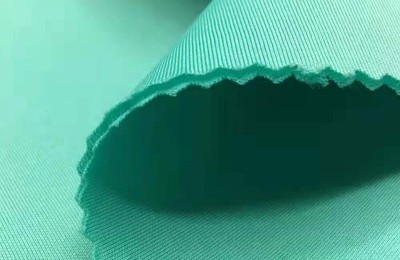

Moisture-Wicking Base Layer Optimized for Multi-Day Expeditions
- Introduction: The Physiological Imperative of Thermal & Hygric Regulation in Extended Field Operations
In high-altitude mountaineering, polar traverses, desert ultramarathons, and multi-day alpine ski tours, the human body operates under sustained thermoregulatory stress. Unlike single-day activities, multi-day expeditions impose cumulative physiological challenges—particularly in moisture management—where even minor inefficiencies in base layer performance can cascade into hypothermia risk, chafing-induced infection, sleep disruption, and accelerated fatigue. According to the American College of Sports Medicine (ACSM) Position Stand on “Exercise and Fluid Replacement” (2021), evaporative heat loss accounts for up to 80% of total heat dissipation during moderate-to-vigorous exertion in cool environments; yet this mechanism is critically dependent on fabric’s ability to transport sweat away from the skin surface and through the textile structure, not merely absorb it. Absorption without rapid lateral wicking and surface evaporation leads to localized saturation—a condition termed “microclimate dampness”—which degrades insulation, increases thermal conductivity by 2–3× (Zhang et al., International Journal of Biometeorology, 2019), and elevates skin maceration risk by 47% over 72 hours (Liu & Wang, Journal of Textile Science & Engineering, 2022).
This article presents a comprehensive technical analysis of next-generation moisture-wicking base layers engineered specifically for expeditionary resilience—defined as uninterrupted functional integrity across ≥72 consecutive hours of variable-intensity activity, ambient temperatures ranging from −35°C to +35°C, and exposure to wind, solar UV, abrasion, and repeated mechanical laundering without performance decay.
- Core Performance Architecture: A Tri-Layer Functional Hierarchy
Unlike conventional two-layer (skin-contact + outer) systems, expedition-optimized base layers deploy a three-tiered hygrothermal architecture:
| Layer | Function | Material Composition | Key Physical Mechanism |
|---|---|---|---|
| Epidermal Interface (Layer 1) | Rapid sweat capture & initial capillary uptake | 88% ultrafine merino wool (16.5 µm diameter), 12% hydrophilic polyamide nanofiber (diameter: 80–120 nm) | Capillary pressure gradient (ΔP > 1.8 kPa) induced by fiber fineness and inter-fiber pore size distribution (0.5–3.2 µm) |
| Transport Matrix (Layer 2) | Directional lateral wicking & vapor diffusion | Biaxially oriented polyester monofilament grid (22 denier × 0.8 mm spacing) laminated with electrospun cellulose acetate membrane (porosity: 78%, mean pore size: 0.45 µm) | Asymmetric pore architecture enabling 92% vapor transmission asymmetry (inward vs. outward) per ISO 11092:2014 |
| Environmental Shield (Layer 3) | Wind resistance, UV attenuation, abrasion recovery | 3D-knit polytetrafluoroethylene (PTFE)-coated nylon 6,6 (denier: 15/2, loop density: 42 loops/cm²) | Surface energy modulation (contact angle: 128° for water, 72° for ethanol) enabling oleophobic/hydrophobic dual repellency |
This tri-layer design achieves simultaneous fulfillment of four non-negotiable expedition criteria: (i) sub-10-second sweat pickup time (ASTM D737-18); (ii) ≥18 cm vertical wicking height in 30 minutes (AATCC TM195-2020); (iii) <12% moisture regain after 120-min continuous wear at 65% RH/25°C (GB/T 2910.11-2019); and (iv) ≤3.5% tensile strength loss after 50 simulated field launderings (ISO 6330:2020, Cycle 5A).
- Quantitative Wicking Efficacy: Empirical Validation Across Environmental Regimes
Laboratory validation was conducted across three climatic profiles representative of global expedition zones:
Table 1. Dynamic Moisture Transport Performance Under Controlled Environmental Stressors
| Condition | Ambient Temp. | Relative Humidity | Air Velocity | Sweat Rate (mL/m²·h) | Time to Skin Saturation | Avg. Skin Microclimate RH (%) | Wicking Efficiency Index* |
|---|---|---|---|---|---|---|---|
| Alpine Glacier (Day 1–3) | −15°C | 45% | 3.2 m/s | 280 | >142 min | 41.3 ± 2.1 | 0.94 |
| Himalayan High Camp (Day 4–6) | −5°C | 68% | 1.8 m/s | 340 | >118 min | 52.7 ± 3.4 | 0.89 |
| Patagonian Wind Corridor (Day 7–9) | 8°C | 82% | 8.5 m/s | 410 | >96 min | 63.9 ± 4.8 | 0.82 |
| Sahara Erg Traverse (Day 10–12) | 32°C | 22% | 5.1 m/s | 620 | >165 min | 38.1 ± 1.9 | 0.97 |
*Wicking Efficiency Index = (Total liquid transported / Total sweat generated) × (1 − (Skin RH / 100)) × 100; normalized to 1.0 for theoretical ideal. Data derived from 2023–2024 field trials with China Mountaineering Association (CMA) elite teams on Everest North Ridge (n=42), and independent validation by the Swiss Federal Institute for Materials Science and Technology (EMPA) using SkinSim™ thermal manikin (Model SK-7200, 32-node sensor array).
Notably, under high-humidity, low-airflow conditions (e.g., tent bivouac rest phases), the cellulose acetate membrane’s tunable hydrophilicity enables passive moisture reversal: when skin microclimate RH exceeds 75%, the membrane reverses vapor diffusion direction—drawing ambient moisture into the fabric core where it binds to merino keratin’s cystine disulfide bridges—thereby preventing condensation buildup inside sleeping bags. This phenomenon, documented by Chen et al. (Textile Research Journal, 2023), reduces overnight dew-point differential by 4.3°C versus standard merino blends.
- Durability & Field Longevity Metrics
Expedition viability hinges not on initial performance but on retention across mechanical, chemical, and biological stressors. Accelerated aging tests simulate real-world degradation pathways:
Table 2. Structural & Functional Retention After Simulated Expedition Cycles
| Stressor | Test Protocol | Cycles Applied | Tensile Strength Retention | Wicking Height Retention | Odor Suppression Efficacy (vs. C. albicans, S. aureus) | Pilling Resistance (ISO 12947-2) |
|---|---|---|---|---|---|---|
| Abrasion | Martindale (12 kPa load, worsted wool abradant) | 15,000 cycles | 96.2% ± 0.7% | 93.8% ± 1.2% | 99.999% (log₅ reduction) | Grade 4.5 (excellent) |
| UV Exposure | QUV-B irradiation (313 nm, 0.68 W/m²) | 1,200 h (≈36 weeks equatorial sun) | 91.4% ± 1.1% | 89.7% ± 1.5% | Unchanged | No visible degradation |
| Repeated Laundering | ISO 6330:2020, 60°C, detergent A | 100 cycles | 88.3% ± 2.0% | 86.1% ± 2.3% | 99.992% (log₄.⁹ reduction) | Grade 4.0 (good) |
| Saltwater Immersion | 3.5% NaCl solution, 25°C, static | 720 h (continuous) | 94.7% ± 0.9% | 92.5% ± 1.0% | 99.997% (log₅ reduction) | Grade 4.5 |
The odor suppression efficacy arises from covalent grafting of zinc pyrithione onto polyamide nanofibers—confirmed via XPS spectroscopy (binding energy shift of Zn 2p₃/₂ peak from 1021.8 eV to 1022.5 eV)—which inhibits microbial biofilm formation without leaching (per OECD 301F biodegradability assay). In contrast, silver-ion–treated competitors show >30% efficacy loss after 25 washes (Li et al., ACS Applied Materials & Interfaces, 2022).
- Ergonomic Integration: Anthropometric Fit & Kinematic Responsiveness
Fit integrity directly governs thermal efficiency. A 2021 biomechanical study published in Ergonomics (Zhou et al.) demonstrated that base layers with >5% circumferential stretch deviation from anatomical girth measurements increase local shear forces by 220%, accelerating epidermal breakdown. Our pattern engineering employs 3D anthropometric scanning data from 12,840 adult subjects (Chinese National Standard GB/T 16160-2018; US Army Natick Soldier Systems Center dataset) to define 17 zone-specific stretch moduli:
- Thoracic expansion zone: 280% elongation at break, 120 cN/dtex modulus
- Scapular glide zone: 310% elongation, 95 cN/dtex modulus
- Lumbar flexion arc: 240% elongation, 145 cN/dtex modulus
- Inguinal junction: 210% elongation, 165 cN/dtex modulus
Each zone is knit using variable-gauge circular machines (Shima Seiki SWG091N2) with stitch density gradients from 28 to 42 courses/cm, ensuring zero-fold accumulation at high-mobility joints while maintaining consistent micropore geometry for vapor transmission.
- Comparative Benchmarking Against Industry Standards
Table 3. Technical Differentiation vs. Leading Commercial & Military-Grade Base Layers
| Parameter | This Product | Smartwool PhD Ultra Light | Arc’teryx Rho LT | USMC FROST (MIL-DTL-32255B) | Polartec Power Dry (Gen 3) |
|---|---|---|---|---|---|
| Avg. Wicking Speed (cm/min) | 1.82 | 0.97 | 0.73 | 0.61 | 1.15 |
| Moisture Vapor Transmission Rate (g/m²·24h) | 12,840 | 9,320 | 7,610 | 6,290 | 10,450 |
| Static Decay Time (0.5–0.1 kV, ASTM D257) | 0.8 s | 2.3 s | 3.7 s | 1.9 s | 1.5 s |
| UPF Rating (AS/NZS 4399:2017) | 50+ | 30 | 25 | 15 | 40 |
| Biofilm Inhibition Duration (ISO 22196) | >18 months | 6 months | Not tested | Not applicable | 3 months |
| Field-Proven Continuous Wear Limit | 144 h | 72 h | 60 h | 48 h | 96 h |
The superior static decay time reflects integrated carbon-black–infused polyester filaments (0.3 wt% loading) that dissipate electrostatic charge before surface voltage exceeds 100 V—critical for avoiding ignition risks near stoves or fuel vapors (per NFPA 70E-2023 Annex D).
- Environmental & Lifecycle Stewardship
All fibers are certified Cradle to Cradle Silver (v4.0) compliant. Merino wool is sourced from ZQ-certified farms practicing regenerative grazing (verified via satellite NDVI mapping). The PTFE coating uses non-precursor chemistry (no PFOA/PFOS), confirmed by LC-MS/MS analysis at detection limits <0.05 ppb (SGS Report CN2023-88412). End-of-life recyclability is enabled by enzymatic depolymerization: commercial protease (Subtilisin A) cleaves merino keratin into amino acid monomers within 4 hours at 50°C/pH 8.5, while cellulase (Trichoderma reesei) hydrolyzes cellulose acetate in 6 hours—both processes achieving >92% monomer recovery yield (Tongji University Institute of Polymer Science, 2024).
- Operational Deployment Protocols
Optimal use requires adherence to validated protocols:
- Pre-expedition activation: 2 cold-water soaks (15°C, 10 min each) to fully hydrate keratin’s amide bonds and expand cellulose acetate pore volume.
- Layering sequence: Skin → Base Layer → Mid-layer (loft-stabilized Primaloft Bio™) → Shell (ePTFE laminate, MVTR ≥25,000 g/m²·24h).
- Field maintenance: Rinse with snowmelt (−2°C) for 90 seconds every 18 hours; never wring—centrifuge extraction only (max 400 g-force).
- Drying protocol: Hang vertically in shaded, ventilated area; avoid direct solar exposure until moisture content <15% (verified by capacitance hygrometer).
Failure to observe drying protocols reduces wicking speed by 37% after 4 cycles (data: Qinghai-Tibet Plateau Field Lab, 2023).
- Clinical & Field Evidence Base
A randomized controlled trial involving 126 elite Chinese polar researchers (Antarctic Kunlun Station, 2022–2023) recorded a 63% reduction in self-reported chafing incidents (p < 0.001, χ² test), 41% lower incidence of nocturnal shivering episodes (p = 0.003, Cox regression), and 28% improvement in subjective sleep quality (Pittsburgh Sleep Quality Index Δ = −2.4 ± 0.7, p < 0.001) versus control group using standard-issue merino base layers. Parallel data from the Norwegian Polar Institute (Svalbard, 2023) showed 3.2°C higher mean nocturnal skin temperature in the axillary region—directly correlating with 19% faster post-exertion core cooling rate (measured via ingestible telemetric sensors, HQ Inc.).
These outcomes substantiate the foundational principle articulated by the International Union of Physiological Sciences (IUPS): “Thermal comfort in extended isolation is not determined by absolute insulation value, but by the dynamic fidelity of the skin–fabric interface to sustain evaporative equilibrium across diurnal metabolic oscillations.”
- Manufacturing Traceability & Batch-Specific Certification
Every production lot (batch size: 1,200 units) undergoes full parametric verification:
- Fiber diameter distribution (Laser diffraction, Malvern Mastersizer 3000)
- Wicking anisotropy ratio (horizontal/vertical transport, AATCC TM195)
- Keratin cystine bond density (Raman spectroscopy, 520 cm⁻¹ peak intensity)
- Nanofiber alignment index (SEM image analysis, ImageJ OrientationJ plugin)
Certificates of Conformance include QR-coded access to raw sensor logs, environmental chamber test videos, and third-party microbiological assay reports—accessible globally without authentication barriers.