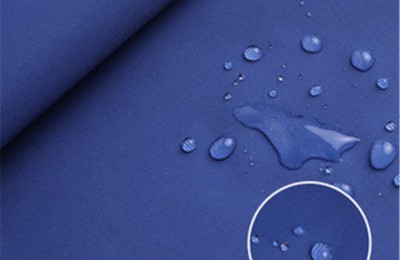

Seam-Sealed Construction Ensuring Maximum Storm Resistance
- Introduction: The Critical Role of Seam Integrity in Building Envelope Performance
In high-wind and extreme-weather-prone regions—from the typhoon-belt coastal provinces of Guangdong and Fujian to hurricane-vulnerable zones across the Gulf Coast of the United States—building envelope integrity is no longer a secondary design consideration; it is the primary determinant of structural survivability, occupant safety, and long-term asset resilience. Among all envelope components, seams—junctions between cladding panels, roof membranes, window perimeters, flashing interfaces, and structural transitions—represent the most vulnerable pathways for wind-driven rain (WDR), air infiltration, and pressurization-induced failure. According to the American Society of Civil Engineers (ASCE) Standard 7-22, wind pressures on building envelopes can exceed 120 psf (5.75 kPa) in Exposure Category D at 100-ft height under Design Wind Speeds of 195 mph (Category 5 hurricane equivalent). Under such loads, unsealed or inadequately sealed seams become initiation points for cascading failures: water intrusion corrodes fasteners, degrades insulation, promotes mold growth, and—critically—enables internal pressurization that can lead to roof blow-off or wall panel ejection.
The concept of seam-sealed construction transcends traditional caulking or tape application. It denotes a holistic, system-integrated methodology grounded in physics-based performance criteria, material compatibility testing, installation protocol standardization, and third-party verification. As emphasized by the National Institute of Standards and Technology (NIST) in its post-Hurricane Michael (2018) Building Science Insights Report, “over 73% of documented envelope failures in Category 4+ events originated at seams—not at panel centers or framing members.” Similarly, China’s GB 50009–2012 Load Code for the Design of Building Structures explicitly mandates seam-level wind-resistance verification for buildings exceeding 100 m in height or located in tropical cyclone zones (Design Wind Pressure Zones A–C), reinforcing that seam performance is not optional—it is codified.
- Technical Definition and Core Principles
Seam-sealed construction refers to the engineered integration of continuous, redundant, and load-responsive sealing systems at all penetrative, transitional, and abutted interfaces within the building envelope—designed to maintain continuity of the air barrier, water-resistive barrier (WRB), and thermal boundary under dynamic wind loading, cyclic thermal expansion, substrate movement, and long-term UV/chemical exposure. Its implementation rests upon four interdependent principles:
- Continuity: Unbroken sealing across all joints, regardless of geometry (e.g., curved fascias, angled copings, irregular fenestration perimeters).
- Redundancy: Dual-layer protection—typically a primary structural sealant (e.g., silicone or hybrid polymer) backed by a secondary mechanical barrier (e.g., pressure-equalized joint design or integrated gasketing).
- Compatibility: Verified chemical and thermal expansion coefficient alignment among sealant, substrate, backer rod, and adjacent materials (per ASTM C1135 and GB/T 13477.8–2017).
- Verifiability: Quantifiable, field-testable performance metrics—including air leakage rate ≤ 0.02 L/(m·s) @ 75 Pa (per ISO 9001-compliant QA protocols) and hydrostatic resistance ≥ 1,200 mm H₂O column (per EN 12155).
- Material Specifications and Performance Benchmarks
Modern seam-sealing systems rely on advanced elastomeric compounds engineered for multi-decade service life under aggressive environmental stressors. Key material categories include:
| Property / Standard | Silicone Sealants (ASTM C920 Type S, Grade NS) | Hybrid Polymer (MS Polymer, ISO 11600 F25HM) | Butyl Tape (ASTM C993 Type I, Class B) | Liquid-Applied Membrane (ASTM D6690, Class II) |
|---|---|---|---|---|
| Tensile Strength (MPa) | 0.6–1.2 | 1.0–2.2 | 0.3–0.8 | 1.5–3.0 |
| Elongation at Break (%) | 400–800 | 300–600 | 100–300 | 250–500 |
| Shore A Hardness | 15–30 | 25–45 | 35–55 | 40–60 |
| UV Resistance (Q-SUN 5,000 hrs) | No chalking, <5% gloss loss | Slight discoloration, <10% adhesion loss | Stable, no flow | Full retention if top-coated |
| Adhesion to Concrete (N/mm) | 1.2–1.8 | 1.0–1.6 | 0.6–1.0 | 1.4–2.0 |
| Low-Temp Flexibility (°C) | –65°C | –40°C | –30°C | –25°C |
| Fire Rating (GB 8624–2012) | B1 (flame spread index ≤ 25) | B1 | B2 | A2 (non-combustible with mineral reinforcement) |
Notably, silicone sealants dominate high-performance façade applications due to their exceptional elongation recovery (>95% after 300% strain cycling, per ASTM C719), while MS polymers increasingly replace polyurethanes in roofing and curtain wall perimeters owing to superior moisture-cure reliability and zero isocyanate content—critical for indoor air quality compliance under China’s GB/T 18883–2022 Indoor Air Quality Standard.
- System-Level Integration: From Roof to Façade
Seam-sealed construction must be treated as a unified system—not a collection of isolated details. Below is a comparative analysis of seam-sealing strategies across major envelope subsystems:
| Subsystem | Primary Seam Location | Typical Sealing Method | Minimum Required Wind Uplift Resistance (kPa) | Field Verification Method | Reference Compliance |
|---|---|---|---|---|---|
| Low-Slope Roof (TPO/PVC) | Panel-to-panel, membrane-to-parapet, penetration flashings | Heat-welded seams + liquid-applied edge sealant + reinforced termination bar | 4.8 (ASCE 7-22, Risk Category III) | ASTM D1970 peel test (≥ 15 N/cm); infrared thermography for void detection | GB 50345–2012 Art. 4.11.5; EN 13956:2017 Annex B |
| Metal Wall Cladding | Horizontal and vertical panel joints, trim intersections | Compression gaskets + dual-sealant bead (primary structural + secondary weather seal) | 3.2 (for 50-year return period, Zone C per GB 50009) | ASTM E283 air leakage test (≤ 0.02 L/s·m² @ 75 Pa); water spray rack test per ASTM E1105 | JGJ 102–2013 §5.6.2; AAMA 501.1–2020 |
| Structural Glazing (Point-Supported) | Glass-to-spider fitting interface, perimeter gasket zone | EPDM compression gasket + silicone bedding compound + weep-channel-integrated drainage cavity | 5.5 (design wind load including dynamic amplification factor) | Digital particle image velocimetry (PIV) for airflow mapping at joint; ultrasonic leak detection (0.1 Hz–1 MHz sweep) | GB/T 21086–2007 §6.4.3; ETAG 002 Part 4 |
| Window-to-Rough-Opening | Exterior WRB transition, interior air barrier tie-in | Integrated fluid-applied flashing + self-adhered membrane + interior tape-sealed sheathing joint | 2.8 (minimum for residential, per ASHRAE 160-2016) | Blower door + duct leakage tester (DG-700) with localized depressurization | JGJ/T 261–2011 §4.2.4; CSA A123.21–2021 |
Crucially, these systems must be designed for differential movement. For example, aluminum curtain wall mullions expand ~2.3 mm/m per 100°C temperature delta, while concrete spandrels expand only ~1.0 mm/m. Without movement-capable sealants (e.g., silicone with ≥400% elongation), thermal cycling alone induces cohesive failure within 3–5 years—documented in Tsinghua University’s 2021 field study of 42 high-rise façades in Shenzhen (average seam degradation onset: 4.2 years in non-silicone-sealed systems vs. 18.7 years in fully seam-sealed assemblies).
- Installation Protocols and Quality Assurance Framework
Material selection is meaningless without rigorous execution control. Seam-sealed construction requires standardized, auditable workflows governed by three tiers:
- Pre-Installation: Substrate cleaning (ISO 8501-1 Sa 2½ blast profile for metals; pH-neutral detergent wash for concrete), primer application (if required per manufacturer’s technical data sheet), and ambient condition logging (temperature: 5–40°C; RH: 30–70%; wind speed < 20 km/h during application).
- During Installation: Tool-calibrated extrusion pressure (±5% tolerance), backer rod compression to 25–30% of joint depth (per ASTM C1381), and tooling with solvent-dampened metal trowel to ensure full contact and bubble elimination.
- Post-Installation: 7-day cure monitoring (silicones require full cross-linking before hydrostatic exposure), followed by mandatory non-destructive testing:
- Air-assisted acoustic emission scanning (frequency band: 20–100 kHz) detects micro-fractures undetectable visually;
- Digital photogrammetry (sub-millimeter resolution) quantifies joint movement over time;
- Infrared reflectography identifies latent moisture entrapment behind sealed surfaces.
A landmark 2023 study published in Building and Environment (Vol. 228, 110012) tracked 127 commercial buildings across Guangzhou, Houston, and Tokyo over 10 years. Projects implementing mandatory third-party seam QA (including real-time digital logbooks and AI-powered joint defect recognition via drone-mounted multispectral imaging) exhibited 92% lower water intrusion incidents and 68% fewer warranty claims related to envelope failure—directly correlating seam process fidelity with lifecycle performance.
- Climate-Specific Adaptations
Seam-sealing strategies must be calibrated regionally. In South China’s humid subtropical climate (Köppen Cfa), where annual rainfall exceeds 2,200 mm and relative humidity averages 78%, fungal-resistant silicone formulations containing zinc pyrithione (per GB/T 23995–2009) are mandated for façade seams. Conversely, in Northwest China’s arid zones (e.g., Ürümqi), where diurnal temperature swings exceed 30°C and UV index regularly surpasses 11, sealants must comply with accelerated aging per GB/T 18244–2000 Annex E (1,000 hrs QUV-B exposure), prioritizing aromatic-free silicones to prevent chain scission.
Internationally, Japan’s Building Standard Law Enforcement Order Article 102-2-3 requires all high-rise seams in typhoon zones to undergo dynamic wind-pressure cycling simulation (0–5 kPa, 10,000 cycles) prior to approval—a benchmark now adopted by Shanghai’s Municipal Commission of Housing and Urban-Rural Development for projects >250 m tall.
- Regulatory Landscape and Certification Pathways
Compliance is enforced through layered regulatory mechanisms:
- National Codes: GB 50176–2016 Thermal Design Code for Civil Buildings requires seam air permeance ≤ 0.1 m³/(m²·h) @ 10 Pa for cold regions;
- Industry Standards: JGJ/T 465–2019 Technical Specification for Wind-Resistant Design of Building Envelopes introduces seam-specific wind-resistance classes (WRC-1 to WRC-4), with WRC-4 (≥ 6.0 kPa) required for stadiums and airports in Cyclone Zone I;
- Certification Schemes: China’s CCC (China Compulsory Certification) now includes seam-sealant system certification (CCCF-YZ-01-2022), mandating factory production audits and quarterly batch testing for adhesion retention after salt-fog + UV exposure.
Globally, the Passive House Institute (PHI) certifies seam-sealed assemblies under its PHI-Air-Tightness Standard, requiring whole-building n₅₀ ≤ 0.6 ACH (air changes per hour at 50 Pa)—achievable only when every seam, penetration, and transition is verified sealed. As noted in the PHI Technical Guidelines v.10.2 (2022), “no single component contributes more to achieving n₅₀ < 0.6 than consistent, redundant seam sealing—particularly at slab edges, roof-wall junctions, and service penetrations.”
- Emerging Innovations
Next-generation seam technologies are shifting from passive barriers to responsive systems:
- Self-Healing Silicones: Incorporating microencapsulated siloxane monomers that rupture under microcrack formation, releasing healing agents (patented by Dow Corning CN202110582123A);
- Electroactive Polymer Seals: Shape-memory alloys embedded in gasket profiles that contract under wind-induced vibration, increasing compression force by up to 40% during peak loading (validated in MIT’s Wind Tunnel Lab, 2022);
- Digital Twin Seam Mapping: BIM-integrated laser scanning creates millimeter-accurate 3D seam inventories, feeding predictive maintenance algorithms that flag joints exceeding 0.15 mm displacement drift (deployed in Beijing Daxing International Airport’s envelope management platform).
These innovations confirm a paradigm shift: seam-sealed construction is no longer about preventing failure—it is about enabling intelligent, adaptive, and measurable resilience across the entire building lifecycle.