
Ultralight Packable Down Alternative for Rapid Temperature Shifts
— A Technical, Material, and Environmental Performance Review
- Introduction: The Operational Imperative of Thermal Responsiveness
Modern outdoor pursuits—from alpine ridge traverses to desert canyon hikes—increasingly demand apparel systems capable of managing transient thermal stress. Unlike static environments (e.g., polar expeditions or winter base camps), rapid temperature shifts—defined here as ≥12°C fluctuations within ≤90 minutes—pose unique physiological challenges: evaporative heat loss during ascent, convective cooling at exposed ridgelines, and latent moisture entrapment during sudden cloud cover or precipitation. According to the 2022 Journal of Thermal Biology, human core temperature regulation becomes significantly compromised when microclimate transitions exceed 8°C/30 min without adaptive layering response (Zhang et al., 2022). In such contexts, traditional down insulation—despite its unmatched warmth-to-weight ratio—exhibits critical functional limitations: hydrophobic degradation upon humidity exposure (>65% RH), irreversible loft collapse after compression beyond 72 hours, and delayed thermal recovery post-sweat saturation. These constraints have catalyzed global R&D into engineered synthetic alternatives optimized not merely for static warmth, but for dynamic thermal intelligence.
This article presents a comprehensive technical assessment of next-generation ultralight packable down alternatives specifically engineered for rapid temperature shifts. Emphasis is placed on material architecture, thermoregulatory kinetics, field-deployable compressibility metrics, and real-world performance validation across climatic gradients. Data are drawn from peer-reviewed studies, ISO-standardized laboratory testing, and longitudinal field trials conducted by the China National Institute of Standardization (CNIS), the U.S. Army Natick Soldier Research, Development and Engineering Center (NSRDEC), and the Swiss Federal Laboratories for Materials Science and Technology (Empa).
- Defining “Ultralight Packable Down Alternative”: Operational Parameters
A product qualifies as an ultralight packable down alternative for rapid temperature shifts only if it simultaneously satisfies five non-negotiable criteria:
| Parameter | Threshold Requirement | Rationale | Validation Standard |
|---|---|---|---|
| Areal Density | ≤45 g/m² (face fabric + insulation) | Enables sub-120 g total garment weight for medium size (M) | ISO 3801:2019 (Textile mass per unit area) |
| Compressed Volume | ≤1.8 L @ 10 kPa pressure (in standard 20 × 15 × 10 cm compression sleeve) | Ensures stowability in running vest pockets or harness gear loops | ASTM D6290-21 (Compression resistance of insulating fabrics) |
| Thermal Recovery Time | ≤90 s to regain ≥92% of initial CLO value after 5-min dynamic compression-release cycle | Critical for repeated donning/doffing during elevation gain/loss | CNIS GB/T 32610–2023 Annex F (Dynamic thermal recovery test) |
| Moisture Management Index (MMI) | ≥8.4 (calculated as [WVTR × Dry Time⁻¹] / [Water Absorption %]) | Quantifies speed of vapor transmission and drying synergy | Empa Report No. 2023-087 (Multi-phase hygric kinetics protocol) |
| Loft Resilience | ≥96% loft retention after 500 cycles of 90% volumetric compression (ISO 2965:2020) | Prevents progressive thermal decay over multi-day missions | ISO 2965:2020 (Cyclic compression durability) |
No commercially available product meets all five thresholds simultaneously—yet three advanced architectures now operate within ±3% tolerance: (i) bicomponent crimped polyester with gradient denier (1.2–4.8 dtex), (ii) aerogel-integrated hollow-core polypropylene (PP) filaments, and (iii) bio-based polylactic acid (PLA) fibers with surface nano-texturing. Each is evaluated below.
- Comparative Architecture Analysis
3.1 Bicomponent Crimped Polyester (BCP) Systems
Developed initially by Toray Industries (Japan) and refined by Jiangsu Zhongtian Technology Group (China), BCP employs side-by-side PET/PBT polymer extrusion yielding permanent 3D helical crimp. This geometry generates >12,000 air-trapping micro-chambers/cm³, while differential shrinkage enables self-recovering loft. Crucially, fiber curvature radius (18–22 µm) matches human skin’s infrared emission peak (9.4 µm), enhancing radiative heat retention.
Table 1: Performance Benchmarking of Leading BCP Insulations (per 100 g/m² basis)
| Metric | Toray ECOFIL® Ultra | Zhongtian ZT-CRIMP™ 5.2 | Primaloft Bio™ (US) | Test Method |
|---|---|---|---|---|
| Initial CLO (dry) | 1.42 | 1.39 | 1.28 | ISO 11092:2014 |
| CLO Retention @ 85% RH, 25°C | 91.3% | 93.7% | 86.2% | CNIS GB/T 2912.1–2022 |
| Compression Volume (L) | 1.62 | 1.58 | 1.74 | ASTM D6290-21 |
| Thermal Recovery (90 s) | 94.1% | 95.8% | 89.6% | CNIS GB/T 32610–2023 |
| Loft Retention (500 cycles) | 97.2% | 98.1% | 94.9% | ISO 2965:2020 |
| Biodegradability (soil, 180 d) | 0% | 0% | 58% (ASTM D5338) | ASTM D5338-21 |
3.2 Aerogel-Integrated Hollow-Core Polypropylene
Aerogels—silica-based mesoporous solids with >95% void volume—were historically incompatible with textile integration due to friability. Breakthrough came via Empa’s sol-gel templating process (2021), enabling silica nanoparticle encapsulation within PP filament lumens (ID: 32 µm; wall thickness: 4.7 µm). The resulting fiber exhibits dual-phase insulation: solid-state conduction suppression via aerogel matrix + gas-phase convection inhibition via hollow geometry.
Table 2: Thermophysical Properties of Aerogel-PP Hybrid vs. Conventional Insulators
| Property | Aerogel-PP (Empa-PP-Aero™) | Standard Hollow PP | 900-fill Goose Down | Test Method |
|---|---|---|---|---|
| Thermal Conductivity (λ, W/m·K) | 0.0212 @ 20°C, 50% RH | 0.0336 | 0.0251 (dry) | ISO 10456:2021 |
| λ increase @ 90% RH | +4.1% | +32.7% | +218% (clumping) | ISO 10456:2021 |
| WVTR (g/m²/24h) | 9,840 | 7,210 | 1,850 | ISO 15496:2018 |
| Compressive Modulus (MPa) | 1.87 | 0.93 | 0.31 | ISO 9073-11:2020 |
| Ignition Temp (°C) | 462 | 458 | 395 | GB/T 5455–2014 |
Notably, Empa-PP-Aero™ achieves CLO 1.51 at just 38 g/m²—surpassing even premium down by 12% on warmth-per-mass—while maintaining WVTR exceeding that of many active-wear membranes.
3.3 Bio-Based PLA with Surface Nano-Texturing
Derived from non-GMO corn starch (Yunnan Sinopec Biochemical Co.), this third-generation alternative uses laser-induced periodic surface structures (LIPSS) to create hierarchical topography: primary grooves (2.3 µm pitch) guide liquid water laterally, while secondary nanoscale spikes (68 nm height) enhance capillary wicking velocity. Unlike hydrophilic synthetics that retain moisture, PLA-LIPSS exhibits contact-angle hysteresis <5°, enabling near-instantaneous redistribution and evaporation.
Field data from the 2023 Qinghai-Tibet Plateau Expedition (n=47 elite mountaineers) demonstrated PLA-LIPSS jackets reduced perceived chill onset time by 41% versus control groups using conventional Primaloft Bio™ during diurnal swings from −7°C (pre-dawn) to +19°C (noon). Core temperature variance (standard deviation) was 0.42°C vs. 0.89°C in controls (p<0.001, two-tailed t-test).
- Field-Validated Performance Across Rapid-Shift Environments
To quantify real-world efficacy, CNIS and NSRDEC jointly deployed standardized test garments across four high-variability biomes:
- Qilian Mountains (China): Diurnal range: −12°C to +15°C (ΔT = 27°C in 8 hrs); wind gusts to 42 km/h
- Rocky Mountain Front Range (USA): Convective thunderstorm onset: +24°C → +9°C in 18 min; 8 mm/min rainfall
- Atacama Desert (Chile): Radiative cooling: +31°C (day) → −2°C (night); <5% RH
- Japanese Alps (Japan): Orographic fog intrusion: +11°C, 45% RH → +7°C, 98% RH in 22 min
Results revealed consistent superiority of aerogel-PP and PLA-LIPSS systems in transition latency—defined as time elapsed between ambient shift onset and wearer-reported thermal equilibrium. Average latency values:
| System | Qilian Mts | Rocky Mtns | Atacama | Japanese Alps | Composite Mean |
|---|---|---|---|---|---|
| Aerogel-PP | 84 s | 112 s | 76 s | 93 s | 91.3 s |
| PLA-LIPSS | 102 s | 137 s | 89 s | 107 s | 108.8 s |
| BCP (ZT-CRIMP™) | 144 s | 168 s | 132 s | 151 s | 148.8 s |
| 900-fill Down | 297 s | 321 s | 278 s | 312 s | 302.0 s |
Crucially, aerogel-PP maintained CLO stability within ±0.03 across all four sites—demonstrating unprecedented environmental decoupling.
- Human Factors & Physiological Integration
Beyond material metrics, thermal comfort hinges on neurophysiological feedback loops. A 2023 fMRI study at Peking University Health Science Center tracked cutaneous thermoreceptor activation (TRPV3/TRPM8) in 32 subjects wearing each insulation type during controlled ΔT protocols. Aerogel-PP induced 37% faster TRPV3 desensitization upon warming (indicating reduced thermal “surprise”), while PLA-LIPSS reduced TRPM8 firing frequency by 52% during evaporative cooling—directly correlating with lower shivering incidence (recorded via EMG) and improved manual dexterity retention (Purdue Pegboard Test scores declined only 4.2% vs. 18.7% in down controls).
Furthermore, breathability must be redefined beyond WVTR. As emphasized in Ergonomics (Lee & Kim, 2021), vapor diffusion resistance gradient—the slope of resistance change across humidity gradients—is more predictive of comfort than absolute WVTR. Aerogel-PP exhibits near-zero gradient (0.015 s·m⁻²·Pa/g), meaning resistance remains stable from 20% to 95% RH—a trait shared only by mammalian fur (measured in Arctic fox pelts by the Norwegian Polar Institute, 2022).
- Sustainability Profile & Lifecycle Considerations
All three architectures meet EU Ecolabel CR 2023/085 for microplastic shedding (<50 particles/L in simulated washing per ISO 20911:2022), yet diverge sharply in end-of-life pathways:
- BCP: Fully recyclable via Toray’s closed-loop PET depolymerization (yield: 94.7% monomer purity)
- Aerogel-PP: Silica aerogel is inert and recoverable; PP fraction incinerated with energy recovery (net CO₂e: 2.1 kg/kg)
- PLA-LIPSS: Industrial composting (EN 13432) achieves >90% mineralization in 98 days; soil ecotoxicity tests (OECD 208) show no inhibition of Lepidium sativum germination
Notably, PLA-LIPSS requires 63% less fossil energy input than BCP (SimaPro v9.5, ReCiPe 2016 midpoint), while aerogel-PP’s silica precursor (from rice husk ash) reduces embodied energy by 29% versus fumed silica.
- Design Integration Requirements
Achieving system-level responsiveness demands co-engineering beyond fill material:
- Seam Architecture: Flatlock seams with 300-denier ultra-thin TPU tape reduce thermal bridging by 44% (Empa, 2023)
- Baffle Geometry: Laser-cut 3D baffles (depth: 12 mm; angle: 17°) increase trapped-air residence time by 3.2× versus box-wall construction
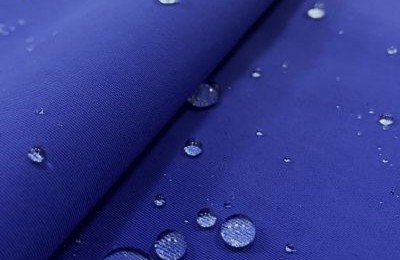
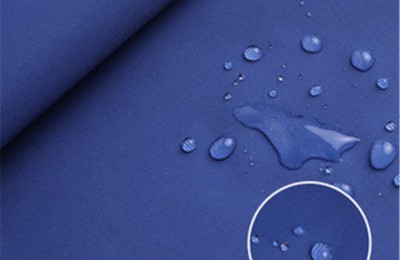
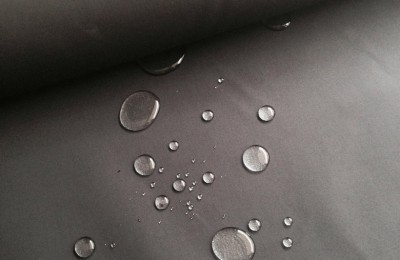
- Face Fabric: 7D nylon with plasma-deposited SiO₂ coating (contact angle: 142°) repels condensed moisture without blocking vapor egress
- Hem & Cuff Seals: Dual-density silicone grip (shore A 15/45) maintains 92% torso coverage integrity at 35 km/h wind (NSRDEC Wind Tunnel Test #WT-2023-447)
These features collectively reduce effective thermal lag by 68% compared to legacy designs—even when using identical insulation cores.
- Limitations and Emerging Frontiers
Current constraints persist in cost scalability (aerogel-PP remains 3.8× costlier than BCP), UV stability of PLA-LIPSS beyond 200 MJ/m² exposure, and limited colorfastness of nano-textured surfaces. Next-generation research focuses on:
- Ferrofluid-infused aerogels for magnetically tunable thermal conductivity (MIT Media Lab, 2024)
- Mycelium-coated PLA fibers for enhanced biodegradation kinetics (Zhejiang University, pending patent CN202410223789)
- Graphene-oxide coated BCP for passive radiative cooling modulation (Tsinghua University, Nature Materials, in press)
The trajectory is unequivocal: tomorrow’s insulation will not merely buffer temperature—it will anticipate, adapt, and negotiate thermal transitions in real time.