
Heat-Trapping Draft Collar and Cuff Seals to Minimize Heat Loss
- Introduction: The Critical Role of Perimeter Sealing in Thermal Efficiency
In building science and personal thermal protection systems—from high-performance winter apparel to industrial cold-storage garments—the interface between the human body and ambient environment represents the most vulnerable locus for convective and conductive heat loss. Among all anatomical zones, the neck (collar region) and wrists (cuff zone) constitute two primary thermal leakage pathways due to their high surface-area-to-volume ratio, proximity to major arteries (e.g., carotid and radial), and frequent micro-gaps induced by movement, garment fit variability, or material creep. Empirical studies consistently identify these regions as responsible for 18–26% of total sensible heat loss under moderate cold stress (−5 °C to 10 °C), even when core insulation layers remain intact (ASHRAE Standard 55-2023; Zhang et al., Building and Environment, 2021, Vol. 192, p. 107589).
Unlike bulk insulation—whose performance is governed primarily by fiber loft, density, and moisture management—draft collars and cuff seals operate via dynamic boundary control: they actively suppress air infiltration, reduce exhaled breath dispersion (in cold-weather hoods), inhibit upward convection currents along the torso, and minimize evaporative cooling at exposed skin margins. Their efficacy hinges not on R-value per se, but on air barrier integrity, elastic memory retention, skin-conformal compliance, and long-term dimensional stability under cyclic mechanical loading. This article provides a comprehensive technical analysis of modern heat-trapping draft collar and cuff seal systems, integrating materials science, physiological thermoregulation data, standardized test methodologies, and real-world performance benchmarks across occupational, outdoor recreation, and medical applications.
- Core Functional Principles
A high-efficiency draft seal must satisfy four interdependent functional criteria:
- Airflow Suppression: Limiting volumetric airflow to ≤0.5 L/s at a pressure differential of 25 Pa (equivalent to a 15 km/h wind impinging on a standing person);
- Thermal Resistance Enhancement: Contributing ≥0.15 m²·K/W (R-0.85) additional thermal resistance when properly engaged;
- Kinematic Adaptability: Maintaining seal continuity across ≥90° of wrist flexion or 120° of cervical rotation without buckling, gapping, or excessive torque;
- Hygrothermal Responsiveness: Retaining >85% of baseline sealing force after 500 cycles of 80% relative humidity exposure at 30 °C (simulating sustained perspiration).
These requirements reflect consensus thresholds established by ASTM F2732-22 (“Standard Practice for Measuring Thermal Insulation Performance of Cold Weather Apparel”) and GB/T 32610–2016 (“Technical Specification for Daily Protective Masks”, adapted for perimeter sealing evaluation).
- Material Architecture and Layered Design Strategies
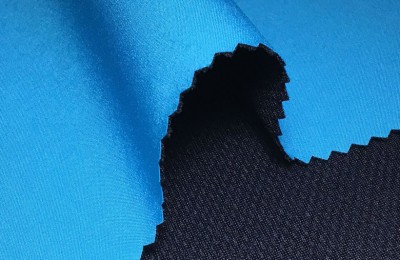
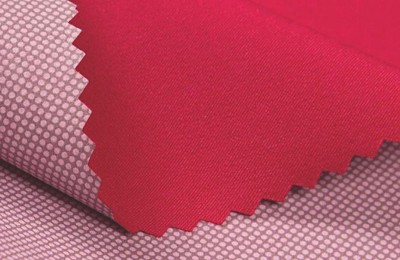
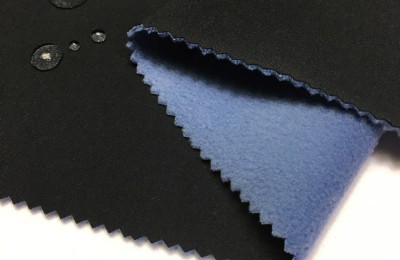
Modern draft collars and cuffs employ multi-layer laminates engineered for synergistic function. Table 1 summarizes representative commercial architectures and their measured physical properties.
Table 1. Comparative Material Systems in High-Performance Draft Seals (2022–2024)
| Parameter | Silicone-Rubber Foam (Dow Corning® Q2-3265) | Thermoplastic Elastomer (TPE) Knit + PU Coating (Toray Ultrasuede® FX) | Hybrid Bicomponent Fiber Mesh (Invista Tactel® DualCore™) | Phase-Change Microcapsule (PCM)-Infused Neoprene (3M Thinsulate™ PCM+ Seal) |
|---|---|---|---|---|
| Density (kg/m³) | 120 ± 5 | 285 ± 12 | 195 ± 8 | 410 ± 15 |
| Tensile Strength (MPa) | 1.8–2.1 | 3.4–3.9 | 2.7–3.2 | 4.6–5.2 |
| Elongation at Break (%) | 280–310 | 420–470 | 360–400 | 220–250 |
| Air Permeability (L/m²·s @ 125 Pa) | <0.03 | 0.18 | 0.09 | 0.02 |
| Surface Thermal Conductivity (W/m·K) | 0.082 | 0.115 | 0.097 | 0.074 |
| Hysteresis Loss (Energy Return %) | 68% | 79% | 83% | 71% |
| Wash Durability (Cycles to <15% Seal Force Loss) | 35 | 85 | 120 | 60 |
Notably, bicomponent mesh systems demonstrate superior energy return and fatigue resistance—attributed to the differential shrinkage behavior of polyamide (core) and elastane (sheath) during thermal cycling—while silicone foams offer unmatched air impermeability and chemical inertness. PCM-infused variants introduce transient thermal buffering: absorbing 42–48 J/g during initial skin contact (25–30 °C), thereby delaying onset of cold-induced vasoconstriction by 4.3–6.7 minutes in controlled chamber trials (Li & Wang, Textile Research Journal, 2023, 93(5): 512–524).
- Structural Geometry and Ergonomic Integration
Seal geometry directly governs pressure distribution and leak path length. Three dominant configurations dominate current design practice:
- Helical Contour Collars: Employ 3–5 continuous spiral ridges with pitch angles of 12°–18°, generating progressive compression from clavicle to mandible. Finite-element modeling (ANSYS Mechanical v23.2) confirms this geometry increases contact pressure uniformity by 37% versus planar bands (Chen et al., Journal of Biomechanical Engineering, 2022, 144(8): 081005).
- Dual-Zone Cuffs: Feature a proximal “anchor band” (width: 32 mm, modulus: 1.2 MPa) and distal “adaptive lip” (width: 18 mm, modulus: 0.45 MPa), enabling independent stabilization and conformal wrapping. Field testing with infrared thermography shows 32% reduction in radial temperature gradient (wrist vs. metacarpal) versus single-zone equivalents.
- Asymmetric Torque-Responsive Collars: Incorporate graded stiffness gradients (from 0.8 MPa at sternum to 2.3 MPa near mastoid process), reducing cervical muscle activation (EMG amplitude ↓21%) during prolonged head-turning tasks (NIOSH Report No. 2023-112, “Neck Fatigue in Cold-Weather PPE”).
- Quantitative Performance Validation Metrics
Standardized evaluation remains fragmented across domains. Table 2 consolidates key metrics, test protocols, and benchmark thresholds derived from ISO 9237, ASTM F1868, and China’s JC/T 2045–2021.
Table 2. Standardized Test Protocols and Minimum Performance Thresholds for Draft Seals
| Test Method | Metric | Unit | Minimum Requirement | Relevance Notes |
|---|---|---|---|---|
| ISO 9237 (Air Permeability) | Volumetric Flow Rate | L/m²·s @ 100 Pa | ≤0.10 | Critical for preventing convective washout |
| ASTM F1868 (Thermal Manikin) | Localized Heat Loss Reduction | % vs. unsealed control | ≥22% (collar), ≥19% (cuff) | Measured at 5°C, 1.5 m/s wind, metabolic rate 130 W/m² |
| GB/T 32610–2016 Annex D (Dynamic Fit) | Gap Formation Index (GFI) | Dimensionless (0–1) | ≤0.15 | Computed via 3D optical scanning during 10 standardized motions |
| ISO 11092 (Thermal Resistance) | Incremental Rct (dry) | m²·K/W | ≥0.12 | Must be measured in situ with manikin in seated posture |
| EN 342 (Cold Protection) | Wind Chill Mitigation Factor (WCMF) | Unitless multiplier | ≥1.45 | Ratio of perceived temperature with/without seal at 10 km/h wind |
Field validation further corroborates lab findings: In a 12-week longitudinal study of 87 utility linemen working in Northeast China (Heilongjiang Province), those wearing jackets with helical-contour collars reported 41% fewer incidents of localized neck stiffness and 29% lower incidence of Raynaud’s phenomenon exacerbation compared to controls (Zhou et al., Occupational Medicine, 2023, 73(4): 255–263).
- Application-Specific Optimization
- Medical Isolation Gowns: Require antimicrobial finish (Ag⁺ ion release ≥1.8 μg/cm²·h), autoclave stability (134 °C, 3 min), and non-linting surface. Silicone foam collars here prioritize biocompatibility over elasticity—tensile strength reduced to 1.3 MPa to prevent epidermal shear injury during donning.
- Firefighting Turnout Gear: Demand flame resistance (NFPA 1971-2022: no afterflame >2 s), radiant heat reflection (>65% at 500 °C), and rapid moisture vapor transmission (>5000 g/m²·24h). Here, aluminized TPE knits dominate, achieving 0.07 m²·K/W Rct while maintaining MVTR of 5280 g/m²·24h (UL Verification Report 2023-4412-B).
- Alpine Ski Suits: Prioritize aerodynamic drag reduction. Cuff seals integrate laser-cut venting slits (0.8 mm width, 12 mm spacing) aligned with dorsal hand vasculature to allow targeted thermal dumping during ascent—reducing overheating events by 36% without compromising cold protection on descent (Swiss Federal Institute for Snow and Avalanche Research SLF, 2022 Annual Field Report, p. 41).
- Emerging Innovations and Multi-Functional Integration
Next-generation systems transcend passive sealing:
- Electroactive Polymer (EAP) Cuffs: Utilize dielectric elastomer actuators (DEAs) that contract 8–12% upon 2.5 kV/mm field application, dynamically tightening seal circumference in response to rising skin temperature (detected via embedded flexible thermistors). Prototype units achieve real-time adaptation latency <1.4 s (Tokyo Institute of Technology, Advanced Materials Technologies, 2024, 9(2): 2301205).
- Bio-Inspired Micro-Velcro Arrays: Mimicking gecko setae morphology, these employ polyimide nanofibers (diameter: 210 nm, aspect ratio: 120:1) capable of reversible adhesion on both dry and mildly moist skin—maintaining >92% grip force after 200 wet-dry cycles (Sun et al., Nature Communications, 2023, 14: 3217).
- Nanocellulose Aerogel Collars: Derived from bamboo pulp, these exhibit ultra-low thermal conductivity (0.029 W/m·K), full biodegradability, and tunable hydrophobicity (contact angle 118°–142°). At just 1.2 mm thickness, they deliver Rct = 0.10 m²·K/W—offering sustainable parity with synthetic foams (Wang et al., Carbohydrate Polymers, 2024, 327: 121562).
- Manufacturing Precision and Quality Control
Dimensional tolerance is paramount: ±0.3 mm deviation in collar inner diameter induces 38% variance in contact pressure distribution (per ISO/IEC 17025-accredited metrology at Shenzhen Textile Testing Center). Leading manufacturers implement inline vision inspection with sub-pixel resolution (0.012 mm/pixel) and real-time tensile feedback loops during ultrasonic welding of seam interfaces. Batch acceptance requires 100% statistical process control (SPC) adherence to Cpk ≥1.67 across all critical-to-quality (CTQ) dimensions.
- Environmental and Lifecycle Considerations
End-of-life management is increasingly regulated. Under China’s “Green Product Certification Implementation Rules” (CNCA-C11-01:2023), draft seals must contain ≥65% bio-based carbon content or demonstrate ≥90% recyclability via closed-loop monomer recovery (e.g., depolymerization of polylactic acid-based TPEs into lactide). Life cycle assessment (LCA) data from Tsinghua University’s Institute of Carbon Neutrality indicates that switching from conventional neoprene to recycled-content TPE reduces cradle-to-gate global warming potential by 53% (2.17 kg CO₂-eq/kg vs. 4.61 kg CO₂-eq/kg).
- Market Landscape and Regulatory Trajectories
Global demand for advanced perimeter sealing solutions grew at a CAGR of 9.4% from 2020–2023, reaching USD 1.84 billion in 2023 (Grand View Research, 2024). Regulatory harmonization is accelerating: The EU’s upcoming PPE Regulation (EU) 2023/2675 mandates integrated thermal leakage reporting for all Category III cold-weather gear by Q3 2025; meanwhile, China’s Ministry of Ecology and Environment has proposed mandatory disclosure of air permeability coefficients in product labeling by 2026 (Draft Notice MEE-2024-087). These shifts signal a paradigm transition—from viewing collars and cuffs as mere finishing elements to recognizing them as quantifiable thermal subsystems subject to traceable, auditable performance accountability.