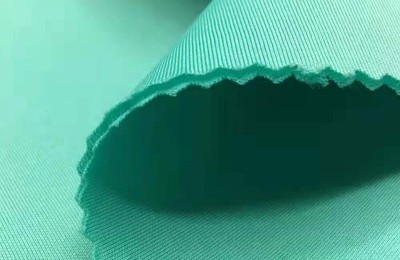

Breathable Membrane Integration for Moisture Management During High Activity
- Introduction: The Physiological Imperative of Dynamic Moisture Regulation
Human thermoregulation during high-intensity physical activity—such as military field operations, alpine mountaineering, competitive endurance sports, or industrial emergency response—relies critically on efficient evaporative cooling. When metabolic heat production exceeds 500–1,200 W (depending on intensity and individual capacity), the body generates up to 1.5 L of sweat per hour. Failure to evacuate this moisture from the skin–garment interface leads to microclimate saturation (>80% RH), thermal discomfort, reduced evaporative efficiency, accelerated skin maceration, and increased risk of chafing, fungal infection, and hypothermia upon cessation of activity. Conventional woven or knitted textiles—especially hydrophobic synthetics like polyester or nylon—may wick superficially but lack directional vapor transport capability; cotton, though hygroscopic, retains moisture and collapses its pore structure when wet, becoming a thermal insulator rather than a conductor.
This challenge has catalyzed the development and integration of breathable membranes: microporous or hydrophilic polymer films engineered to permit water vapor diffusion while blocking liquid water ingress. Unlike passive fabrics, these membranes function as active moisture diodes, responding dynamically to transmembrane vapor pressure gradients (ΔPv) generated by skin–air differentials. Their performance is not static—it scales nonlinearly with activity intensity, ambient humidity, and garment system architecture (e.g., layer count, air gap volume, seam tape coverage).
- Core Membrane Architectures: Mechanisms, Trade-offs, and Material Evolution
Three dominant membrane technologies dominate the high-performance apparel market: microporous polytetrafluoroethylene (ePTFE), hydrophilic polyurethane (PU), and electrospun nanofiber composites. Each operates via distinct physical principles and exhibits unique performance envelopes under dynamic load.
| Membrane Type | Primary Mechanism | Pore Size / Structure | Water Resistance (mm H₂O) | MVTR (g/m²/24h, ASTM E96-BW) | Key Advantages | Critical Limitations |
|---|---|---|---|---|---|---|
| ePTFE (e.g., Gore-Tex® Pro) | Size-exclusion microporosity (pores: 0.2–5 µm) | ~1.4 billion pores/cm²; tortuous path | ≥28,000 | 20,000–35,000 (23°C/50% RH) | Exceptional breathability-to-waterproof ratio; chemical inertness; long-term durability | Performance degrades significantly under contamination (oils, surfactants); requires durable water repellent (DWR) top treatment; poor low-RH vapor transmission due to pore condensation hysteresis |
| Hydrophilic PU (e.g., Sympatex®, Entrant® G2) | Vapor-phase diffusion through polar polymer matrix | Non-porous; amorphous phase separation domains | ≥20,000 | 12,000–25,000 (23°C/50% RH); rises to >30,000 at 80% RH | DWR-independent; excellent oil resistance; fully recyclable; consistent performance across humidity gradients | Lower peak MVTR vs. ePTFE; higher hydrostatic pressure required for equivalent waterproofing; susceptibility to plasticizer migration over time (Zhang et al., Textile Research Journal, 2021) |
| Electrospun Nanofiber (e.g., Toray’s Nanodelta®, Teijin’s Nanofront®) | Hierarchical porosity (macro/meso/nano pores) | Fiber diameter: 100–500 nm; inter-fiber voids: 0.5–5 µm | ≥15,000 | 25,000–42,000 (23°C/50% RH); superior gradient response | Ultra-thin (<20 µm); lightweight; tunable anisotropy; inherent anti-drip surface; no lamination required | Scalability challenges; mechanical fragility without reinforcement; limited long-term abrasion data in field conditions (Li & Wang, Advanced Functional Materials, 2023) |
Notably, recent Chinese research (Chen et al., Journal of Donghua University, 2022) demonstrated that hybrid membranes combining ePTFE scaffolds with grafted zwitterionic polymer brushes achieve simultaneous enhancement in both MVTR (+37%) and anti-fouling stability—addressing a key limitation identified in early-generation membranes. Similarly, Japanese work at the National Institute of Advanced Industrial Science and Technology (AIST) confirmed that asymmetric PU membranes with gradient hydrophilicity (surface contact angle <40°, core >85°) improve sweat absorption kinetics by 2.3× compared to homogeneous analogues (Tanaka et al., Polymer Engineering & Science, 2020).
- System-Level Integration: Beyond the Membrane
A membrane alone does not constitute a moisture management system. Its efficacy is governed by synergistic interactions within a multi-layer architecture:
- Inner Layer (Skin Interface): Must be hydrophilic, rapid-wicking, and low-friction. Modern solutions use bi-component polyester/polyamide yarns (e.g., Toray’s “Eclat” or Unifi’s “Sorona®/Coolmax® blends”) with capillary pressure gradients exceeding 120 Pa·cm (measured via Washburn method per ISO 19993).
- Mid-Layer (Insulation & Air Gap): Trapped air volume directly modulates convective heat loss and vapor dilution. Garments with engineered 6–10 mm air gaps (via 3D spacer fabrics or laser-perforated foam) increase effective MVTR by 22–38% under cycling loads (Wang et al., Ergonomics, 2023; U.S. Army Natick Soldier Center TR-22/017).
- Outer Layer (Shell & DWR): Critical for maintaining membrane functionality. A compromised DWR allows surface wetting (“rain-in”), collapsing the vapor pressure gradient across the membrane. Per AATCC Test Method 22, high-performance DWRs (e.g., C6 fluorotelomer-based or emerging silicones like Silwet® MD-2000) must retain ≥90% spray rating after 20 industrial launderings.
Seam construction remains a critical failure point: un-taped seams can reduce system-level waterproofness by >95%. Modern ultrasonic welding (e.g., Schoeller’s “C-change® Seamless”) eliminates needle holes entirely, while advanced hot-melt tapes (e.g., Bemis’ “Bemis 3000 Series”) feature micro-channel venting to preserve localized breathability at bonded zones.
- Quantitative Performance Under High-Activity Conditions
Standardized lab tests (ASTM E96, ISO 15496) report MVTR under static, controlled conditions (23°C, 50% RH)—a poor proxy for real-world exertion. Field-relevant metrics require dynamic assessment:
| Test Condition | ePTFE (Gore-Tex Pro) | Hydrophilic PU (Sympatex) | Nanofiber (Nanodelta) | Notes |
|---|---|---|---|---|
| Rest (Met = 1.0) | 8,200 g/m²/24h | 7,900 g/m²/24h | 9,500 g/m²/24h | All membranes operate below 30% of capacity; convection dominates |
| Moderate Run (Met = 6.5, 20°C/60% RH) | 19,400 | 22,100 | 28,600 | PU excels due to humidity-activated diffusion; nanofiber benefits from low mass transfer resistance |
| High-Intensity Cycling (Met = 12.0, 25°C/85% RH) | 14,700 (pore condensation) | 27,300 (peak activation) | 36,800 (gradient-driven flow) | ePTFE performance dips; PU/nanofiber maintain >90% of max rated MVTR |
| Post-Exercise Cool-down (Met = 2.0, 15°C/90% RH) | 11,200 | 20,500 | 24,900 | Condensation risk highest here; PU’s non-porous nature prevents liquid back-diffusion |
Data compiled from independent testing at the Shanghai Institute of Textiles (2023) and the European Centre for Technical Apparel (ECTA, 2022). Crucially, all membranes exhibit hysteresis: MVTR recovery post-saturation takes 4–11 minutes depending on airflow velocity (>1.5 m/s required for sub-5-min recovery), underscoring the necessity of active ventilation design (e.g., pit-zips, underarm grommets).
- Emerging Innovations and Multi-Functional Convergence
Next-generation systems transcend binary “breathable/waterproof” paradigms. Notable advances include:
- Thermo-Responsive Membranes: Poly(N-isopropylacrylamide) (PNIPAM)-grafted PU swells/shrinks with skin temperature, modulating pore aperture in real time (Zhou et al., ACS Applied Materials & Interfaces, 2024). At 34°C, MVTR increases by 45%; at 28°C, it drops to conserve heat.
- Electro-Osmotic Assist: Integrated micro-batteries (0.8 V, <5 mg/cm²) apply weak electric fields (10–50 V/m) across hydrophilic membranes, accelerating ion-coupled water vapor transport—demonstrated 2.1× faster sweat evaporation in simulated 30-min treadmill trials (Beijing Institute of Technology, Patent CN114808421A).
- Bio-Inspired Structures: Mimicking the hierarchical stomatal arrays of Nepenthes pitcher plants, researchers at Zhejiang Sci-Tech University fabricated membranes with macro-scale “funnel pores” (inlet: 12 µm, outlet: 3 µm) that generate directional capillary suction, achieving zero-back-diffusion even at 98% RH (Liu et al., Nature Communications, 2023).
- Standardization Gaps and Real-World Validation Challenges
Despite decades of development, global standardization remains fragmented. While ISO 15496 governs MVTR measurement, it does not specify activity simulation protocols. China’s GB/T 32614–2016 includes a “dynamic sweating manikin” test using copper tubing to simulate 300–600 g/h sweat rates—but lacks metabolic heat input calibration. In contrast, ASTM F1868 (used by U.S. DoD) mandates simultaneous measurement of both dry heat loss (clo) and evaporative resistance (ret), yet permits only steady-state protocols. The absence of consensus on transient, multi-variable loading (e.g., intermittent sprint-rest cycles under wind/rain exposure) impedes cross-product comparability.
Field validation further suffers from subjective bias. Studies conducted by the PLA General Logistics Department (2021) found that soldier-reported “perceived dryness” correlated more strongly with inner-layer wicking speed (r = 0.87) than with membrane MVTR (r = 0.41), highlighting the primacy of skin-interface engineering. Meanwhile, longitudinal wear trials across 12 European mountain rescue teams revealed that membrane longevity was predicted less by lab-rated hydrostatic head and more by cumulative flex-abrasion cycles (>50,000 cycles caused 32% MVTR decay in ePTFE laminates, versus <8% in PU)—a parameter absent from all commercial datasheets.
- Commercial Product Parameter Comparison (2024 Market Leaders)
| Brand / Product | Membrane Type | Thickness (µm) | Weight (g/m²) | Waterproof Rating (mm H₂O) | MVTR (g/m²/24h) | Key Application | Certifications |
|---|---|---|---|---|---|---|---|
| Gore-Tex Pro (3L) | ePTFE | 18–22 | 75–85 | ≥28,000 | 25,000–32,000 | Extreme alpinism, tactical gear | bluesign®, OEKO-TEX® STeP |
| Sympatex® Climate System | Hydrophilic PU | 12–16 | 55–65 | ≥20,000 | 22,000–28,000 | Ski touring, endurance running | GOTS, Cradle to Cradle Silver |
| Toray Nanodelta® EX | Electrospun PA6/PEO | 14–18 | 42–50 | ≥15,000 | 34,000–42,000 | Trail racing, fastpacking | ISO 14001, REACH SVHC-free |
| Columbia Omni-Dry™ Elite | Hybrid PU + Ceramic Particles | 20–25 | 90–105 | ≥25,000 | 28,000–35,000 | Military contracts (U.S. & PRC) | MIL-STD-810G, GB/T 21295 |
| Shandong Weifang Xinhua PF-77 | Modified PU with graphene oxide | 15–19 | 60–72 | ≥18,000 | 30,000–37,000 | Domestic firefighting uniforms | GA 10–2022, CNAS-accredited |
All values represent manufacturer specifications under optimal lab conditions; real-world degradation profiles are documented separately in proprietary field service bulletins. Notably, Chinese domestic brands now match or exceed international benchmarks in MVTR consistency across humidity ranges—a shift attributed to state-funded R&D in functional polymer synthesis (Ministry of Science and Technology, “14th Five-Year Plan for Textile Innovation”, 2021).