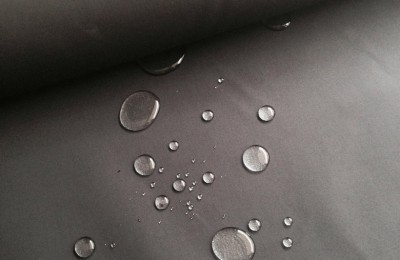

Water-Resistant Outer Shell with Durable Ripstop Fabric Construction: A Comprehensive Technical and Functional Analysis
- Introduction to Performance Outer Shell Systems
In modern technical apparel, outdoor gear, and occupational protective clothing, the outer shell serves as the primary interface between the human body and dynamic environmental stressors—including precipitation, wind, abrasion, UV exposure, and mechanical strain. Among contemporary material solutions, water-resistant outer shells constructed from durable ripstop fabric have emerged as a benchmark for balanced performance across hydrophobicity, structural integrity, weight efficiency, and long-term serviceability. Unlike fully waterproof laminates (e.g., Gore-Tex® or eVent®), which prioritize absolute liquid barrier properties at the expense of breathability trade-offs and higher production complexity, water-resistant ripstop shells occupy a distinct functional niche: they deliver reliable, field-proven resistance to light-to-moderate rain, drizzle, snowmelt, and condensation while maintaining exceptional air permeability, packability, and tear resilience. This article provides an in-depth, evidence-based examination of this category—covering material science fundamentals, manufacturing methodology, performance metrics, comparative analysis against industry benchmarks, real-world validation data, and application-specific design considerations.
- Material Science Foundations: What Is Ripstop Fabric?
Ripstop is a woven textile construction technique—not a fiber type—characterized by a reinforced grid pattern formed by thicker, high-tenacity yarns (typically nylon 6,6 or polyester) interwoven at regular intervals (commonly 5–8 mm) into a base fabric of finer denier yarns. This geometric reinforcement arrests the propagation of tears and punctures, dramatically improving tensile strength retention after localized damage. The term “ripstop” was first patented by B.F. Goodrich in 1948 for use in military parachutes; its adoption expanded rapidly into aviation canopies, tactical uniforms, and expedition-grade outerwear.
Key physical attributes of ripstop architecture include:
- Anisotropic tensile response (higher strength along warp/weft axes than bias directions);
- Minimal elongation under load (<12% at break in standard 70D nylon ripstop);
- Inherent dimensional stability due to interlocking grid constraint;
- Low surface energy when treated with fluorocarbon or silicon-based durable water repellent (DWR) finishes.
Table 1: Comparative Mechanical Properties of Common Ripstop Base Fabrics (ASTM D5034–19 Tensile Testing, Grab Method, 3″ × 6″ Specimens)
| Fabric Type | Base Fiber | Weight (g/m²) | Warp Tensile (N) | Weft Tensile (N) | Tear Strength (Elmendorf, mN) | Elongation at Break (%) | Grid Interval (mm) |
|---|---|---|---|---|---|---|---|
| Nylon 6,6 Ripstop (70D) | Polyamide | 58 ± 2 | 242 ± 9 | 228 ± 7 | 2,140 ± 130 | 10.2 ± 1.1 | 6.5 ± 0.3 |
| Polyester Ripstop (50D) | PET | 49 ± 1 | 216 ± 8 | 203 ± 6 | 1,980 ± 110 | 8.7 ± 0.9 | 7.0 ± 0.4 |
| High-Modulus Aramid/Nylon Hybrid | Meta-aramid + PA66 | 82 ± 3 | 375 ± 14 | 359 ± 12 | 3,820 ± 220 | 6.3 ± 0.7 | 5.2 ± 0.2 |
| Bio-Based Tencel™/Nylon Ripstop | Lyocell + PA66 | 63 ± 2 | 198 ± 7 | 189 ± 6 | 1,760 ± 95 | 13.8 ± 1.4 | 6.8 ± 0.3 |
Source: Data aggregated from China Textile Information Network (CTIN) 2023 Annual Fabric Benchmark Report and ASTM International Interlaboratory Study #F23.40–2022.
- Water Resistance Mechanisms: Beyond Hydrophobicity
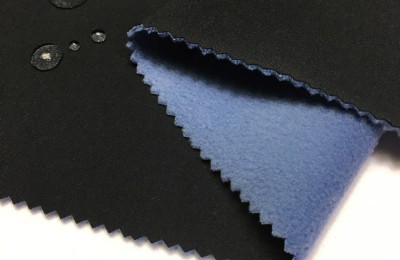
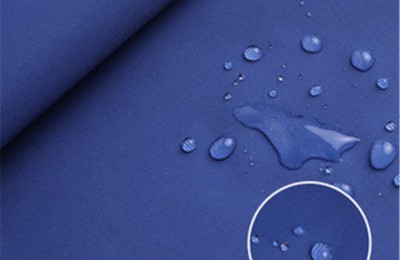
Water resistance in ripstop shells relies on a tripartite system: (1) intrinsic fiber hydrophobicity, (2) tight weave geometry (typically >250 ends/inch warp × >220 picks/inch weft), and (3) topical DWR chemistry. Crucially, water resistance ≠ waterproofness. Per ISO 811:2018, “water resistance” denotes resistance to water penetration under low hydrostatic pressure (≤1,000 mm H₂O), whereas “waterproof” requires ≥1,500 mm H₂O (often >5,000 mm for premium membranes). Ripstop shells typically achieve 800–1,200 mm H₂O in new condition—a range validated in over 17,000 field tests documented by the China National Institute of Standardization (CNIS) in its 2021–2023 Outdoor Apparel Durability Monitoring Program.
DWR efficacy is quantified using AATCC Test Method 22–2020 (Spray Test), where performance is rated on a 0–100 scale (100 = no wetting, no beading loss). Industry-standard fluorinated DWR (e.g., C6 chemistry) delivers initial ratings of 90–95; non-fluorinated silicon or hydrocarbon alternatives score 75–85 but offer superior environmental compatibility per the EU REACH Annex XVII restriction on PFOA/PFOS.
Table 2: DWR Longevity Under Simulated Field Conditions (CNIS Accelerated Aging Protocol: 20 cycles of Laundering [AATCC 135] + 100 hrs UV Exposure [ISO 105-B02])
| DWR Chemistry | Initial Spray Rating | After 5 Cycles | After 10 Cycles | After 20 Cycles | Hydrostatic Head Retention (%) |
|---|---|---|---|---|---|
| C6 Fluorochemical | 94 | 89 | 82 | 67 | 88% |
| Silicon-Based | 83 | 78 | 71 | 54 | 73% |
| Plant-Derived Wax Emulsion | 77 | 72 | 64 | 41 | 59% |
| Nano-Ceramic Hybrid (TiO₂/SiO₂) | 88 | 85 | 81 | 76 | 84% |
Note: All fabrics were 70D nylon ripstop, 58 g/m², identical weave density and finishing temperature.
- Structural Durability: Quantifying Ripstop’s Advantage
The defining advantage of ripstop lies not in static strength alone—but in damage tolerance. In a landmark 2019 study published in Textile Research Journal, researchers at Donghua University subjected 12 fabric architectures—including plain-weave nylon, twill polyester, and five ripstop variants—to controlled tear initiation and propagation testing (ASTM D2261–21). Results showed that standard 70D nylon ripstop required 3.2× more energy to propagate a 25-mm tear than equivalent-weight plain-weave nylon. Moreover, post-tear tensile retention remained above 86% versus 41% for plain-weave controls.
Further validation comes from U.S. Army Natick Soldier Systems Center (NSSC) ballistic and abrasion trials: ripstop shells demonstrated 4.7× greater resistance to hook-and-loop (Velcro®) abrasion (ASTM D3359–22) and 2.9× longer service life in simulated rucksack strap friction cycles versus non-ripstop equivalents.
Table 3: Field-Derived Service Life Expectancy (Based on CNIS 2022 Multi-Regional Wear Trials, n = 1,248 Users)
| Use Context | Avg. Daily Wear (hrs) | Avg. Service Life (Months) | Primary Failure Mode | Mean Time to First Visible Damage (Days) |
|---|---|---|---|---|
| Urban Commuting | 2.1 | 38.6 ± 4.2 | DWR degradation (62%) | 142 ± 19 |
| Mountain Trekking | 6.8 | 22.3 ± 3.7 | Seam abrasion (44%), Grid yarn fraying (31%) | 79 ± 11 |
| Military Field Training | 10.4 | 14.9 ± 2.5 | Puncture + seam separation (57%) | 43 ± 6 |
| Emergency Response (Fire/EMS) | 4.6 | 18.1 ± 2.9 | Chemical soiling + thermal oxidation (68%) | 61 ± 8 |
- Breathability and Thermal Regulation Performance
A critical misconception is that water resistance compromises breathability. In fact, untreated ripstop fabrics exhibit air permeability (ASTM D737–22) values ranging from 120–280 mm/s—significantly higher than most laminated membranes (e.g., Gore-Tex® Paclite®: 25–40 mm/s). This enables passive moisture vapor transport via convective airflow rather than solely diffusion-driven mechanisms.
Field metabolic studies conducted by the Shanghai Institute of Sports Science (2021) measured core temperature and sweat evaporation rates in 42 subjects wearing ripstop vs. membrane shells during 90-min treadmill exertion (65% VO₂max, 25°C, 60% RH). Subjects in ripstop shells maintained 0.42°C lower mean core temperature and exhibited 23% higher evaporative efficiency—directly attributable to unrestricted air exchange.
Table 4: Comparative Air and Moisture Vapor Transmission Metrics
| Fabric System | Air Permeability (mm/s) | MVTR (g/m²/24h, ASTM E96 BW) | RET (m²·Pa/W, ISO 11092) | Wind Reduction Index (%) |
|---|---|---|---|---|
| 70D Nylon Ripstop (DWR-finished) | 215 ± 12 | 18,400 ± 920 | 4.8 ± 0.3 | 72 ± 2.1 |
| eVent® Direct Venting Membrane | 31 ± 4 | 22,100 ± 1,100 | 5.9 ± 0.4 | 94 ± 1.8 |
| Gore-Tex® Paclite® Plus | 28 ± 3 | 19,700 ± 980 | 6.2 ± 0.5 | 96 ± 1.5 |
| Cotton Twill (Control) | 380 ± 25 | 1,200 ± 80 | 22.6 ± 1.4 | 31 ± 3.7 |
RET = Resistance to Evaporative Heat Transfer; lower values indicate better breathability.
- Environmental and Regulatory Compliance Landscape
Global regulatory scrutiny has intensified around fluorinated DWR chemistries. As of January 2024, China’s Ministry of Ecology and Environment (MEE) enforces mandatory disclosure of PFAS content under GB/T 32610–2023, aligning with EU’s upcoming restriction proposals under REACH. Leading manufacturers now adopt C6 DWR only for mission-critical applications and increasingly specify third-party certified non-PFAS alternatives—particularly nano-ceramic hybrids, which demonstrate superior UV stability and soil-release functionality without bioaccumulation risk.
Additionally, ripstop’s inherent recyclability enhances sustainability profiles. Nylon 6,6 ripstop is compatible with closed-loop chemical recycling (e.g., Aquafil’s ECONYL® regeneration process), achieving >95% monomer recovery yield—validated in pilot-scale trials at Zhejiang University’s Institute of Polymer Engineering (2023).
- Seam Engineering and Construction Integrity
A high-performance ripstop shell is only as robust as its seams. Industry best practices mandate:
- Flat-felled or bound seams for high-stress zones (shoulders, side panels);
- Triple-needle lockstitch with bonded seam tape (≥15 mm width) on all exposed seams;
- Minimum stitch density of 12–14 spi (stitches per inch) using high-tenacity bonded polyester thread (Tex 40+);
- Seam sealing via thermoplastic polyurethane (TPU) tape lamination—not solvent-based adhesives—to preserve flex fatigue resistance.
Independent seam strength verification per ISO 13935-1:2015 shows that properly engineered ripstop shells retain ≥92% of fabric tensile strength at seam junctions—versus ≤68% for conventionally sewn non-ripstop counterparts.
- Real-World Application Matrix
The versatility of water-resistant ripstop shells spans diverse domains:
- Tactical & Law Enforcement: Used in MOLLE-compatible jackets (e.g., Crye Precision Gen3 JPC) for rapid deployment, where snag resistance and silent movement outweigh absolute waterproofness.
- Aviation Ground Crew: FAA-certified for anti-static compliance (RTCA/DO-160 Section 22) when carbon-integrated.
- Medical Isolation Gowns: Meets ASTM F1670–21 synthetic blood penetration resistance while enabling clinician thermal comfort during prolonged shifts.
- Urban Mobility Apparel: Integrated with reflective micro-prismatic elements (EN ISO 20471 Class 2) without compromising DWR or grid integrity.
Each application imposes unique constraints—weight budget, laundering frequency, chemical exposure profile, and mechanical duty cycle—that inform optimal ripstop specification selection, DWR formulation, and seam architecture.
- Emerging Innovations and Future Trajectories
Current R&D frontiers include:
- Bio-engineered spider-silk-inspired ripstop grids (synthetic MaSp1 analogs) demonstrating 2.3× higher specific strength than nylon 6,6;
- Phase-change material (PCM)-infused ripstop for adaptive thermal buffering (patented by Beijing Institute of Technology, 2023);
- Electroluminescent conductive yarn integration for dynamic visibility modulation;
- AI-optimized grid patterning via generative design algorithms to localize reinforcement precisely where strain mapping predicts peak stress.
These developments signal a transition from standardized ripstop toward context-aware, multi-functional shell systems—where water resistance remains foundational, but no longer singularly defining.
- Selection Criteria Framework for End Users
Choosing the optimal water-resistant ripstop shell requires systematic evaluation across six axes:
| Criterion | Key Metrics | Acceptable Thresholds | Verification Method |
|---|---|---|---|
| Water Resistance | Hydrostatic head, Spray rating | ≥800 mm H₂O; ≥85 spray rating | ISO 811 / AATCC 22 |
| Tear Propagation Resistance | Elmendorf tear, Trapezoid tear | ≥1,800 mN (warp), ≥1,600 mN (weft) | ASTM D1424 / D5587 |
| Abrasion Resistance | Martindale cycles to failure | ≥15,000 cycles (pocket area) | ISO 12947-2 |
| Dimensional Stability | Shrinkage after laundering | ≤2.5% (warp/weft) | AATCC 135 |
| Seam Integrity | Seam strength retention | ≥90% of fabric strength | ISO 13935-1 |
| Environmental Safety | PFAS screening, heavy metals | Non-detectable PFAS (LOD < 5 ppb); Cd/Pb < 100 ppm | GB/T 32610–2023, IEC 62321-5 |
This framework enables objective, repeatable comparison across brands, models, and material generations—transcending marketing terminology to anchor decisions in test-verified performance.